A four-colour system can remove repeated loading and re-fixturing, but its real value depends on registration, curing, line takt, and changeover—not the number of colours stated on a quotation. By the end, you will be able to identify the machine architecture, calculate its effect on output, define the required interfaces, and decide whether a dedicated four-colour cell fits your parts and production volume.
Key takeaways
- Four color can mean four sequential transfers, not simultaneous printing.
- Calculate four pad transfers when estimating takt time and line output.
- Specify part geometry, artwork registration, cycle time, and automation requirements.
- Choose four-color integration when added print steps justify fewer handling operations.
What “four colour” means in the machine architecture
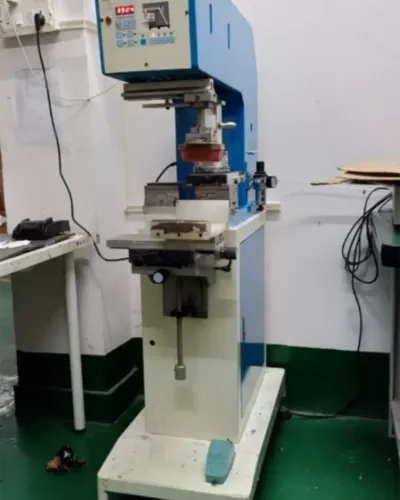
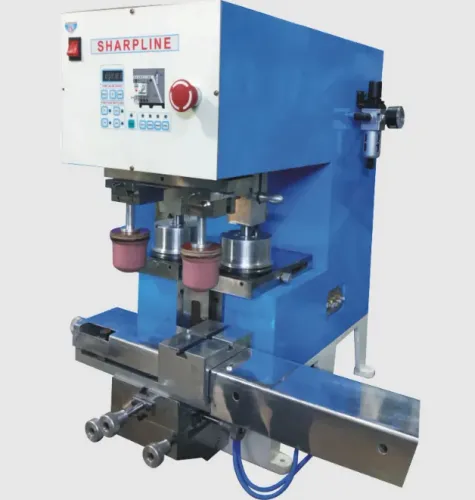
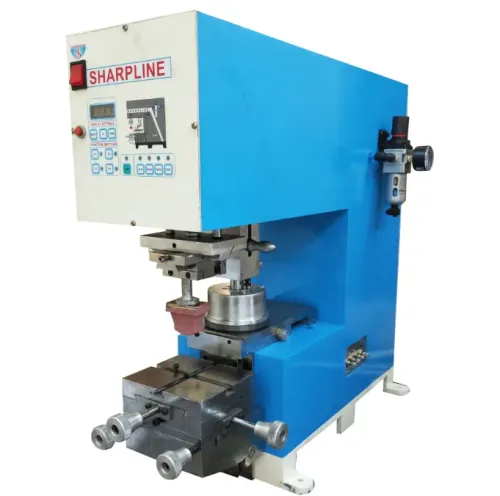
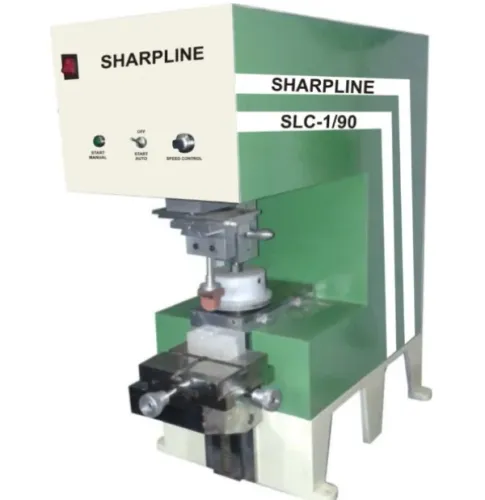
“Four colour” does not automatically mean four colours print simultaneously. Many machines use four separate ink cups and clichés, with one indexed pad station picking up and depositing each image in sequence. That creates four pad transfers and four print cycles for one part. The machine may still be sold as a four-colour system.
| Architecture | What happens | What the quoted cycle may cover |
|---|---|---|
| Sequential indexed station | One pad, or one pad position, transfers colour 1, 2, 3, then 4 while the part remains in a controlled nest | One complete four-colour part, or each indexed position |
| Four-pad arrangement | Four pads pick up separate images and deposit them during parallel or closely timed movements | One complete four-colour part, if all four transfers finish in that cycle |
| Multi-station arrangement | The part moves between dedicated pad stations, with each station applying one colour | One index, one station, or one finished part |
| Single multi-colour transfer | A specialised pad and cliché arrangement deposits multiple colours together | Confirm whether registration and colour separation are included in the stated cycle |
Ask the builder directly: does the cycle time mean one colour, one complete four-colour part, or one indexed batch? Ask whether loading, unloading, index movement, curing, and inspection are included. The practical four color pad printing machine benefits come from keeping the part located between transfers.
Eliminating three unload-and-relocate operations can reduce labour, work-in-process, and registration errors more than a faster individual stroke. That is why four color pad printing machines for special purpose production must be compared by accepted parts per hour, not stroke speed alone.
How registration survives curved, recessed, and irregular parts
Yes—but only if registration is specified and proven on production parts. A special purpose pad printing machine must carry the part from a repeatable datum and nest through the indexer, cliché position, pad compression, and positive restraint without movement.
1. Lock the printed surface against a datum, not cosmetic edges. Account for molded flash, shrinkage, warpage, flexible substrates, textured surfaces, and deep recesses; each can move the artwork or alter contact. Use orientation keys or clamps where fixture wear could let the part float.
2. Design pad angle, hardness, shape, and compression for the surface. The pad must displace air while rolling into a curve or recess. Wrong geometry causes incomplete transfer, image stretch, edge buildup, or distortion.
3. Define the limit as colour-to-colour error on production parts, in millimetres, across the full run. A flat sample proves little. Four color industrial printing equipment needs a run-at-rate trial with production parts, nests, artwork, inks, curing, and inspection.
4. Validate the colour sequence. Set ink opacity and flash-off so the next pad neither smears nor lifts the previous colour; verify UV exposure where UV ink is used. Measure after curing, not immediately after transfer.
If a nest, indexer, or clamp wears, registration drifts before the printer’s stroke repeatability becomes the problem. Record fixture wear limits and reject criteria, then recheck them during the run.
How to calculate the effect on takt time and line output
Four-colour printing makes a line faster only when its complete accepted-part cycle is below the line takt. Calculate the cycle as T = loading + four pick-up/transfer strokes + indexing + flash-off or curing + inspection + reject removal.
Then calculate output as 3,600 ÷ T, multiplied by first-pass yield; a fast stroke does not compensate for slow handling or rejected parts.
| Arrangement | Cycle-time calculation | Main risk |
|---|---|---|
| Sequential four-colour station | Add all four strokes, indexes, curing, and handling | Printer rate excludes the full part cycle |
| Parallel pad stations | Divide the shared print workload by usable stations, then use the slowest station cycle | One common loader or cure stage becomes the bottleneck |
| Separate colour operations | Add every unload, re-location, and reload between colours | Work-in-progress and registration errors increase |
For n parallel stations, compare line output with 3,600n ÷ complete station cycle, then cap it at the conveyor, curing, inspection, or downstream takt. Include operator walking and handoff time. Subtract changeover minutes from available production time; four color pad printing machine benefits disappear if recipes, clichés, pads, and nests consume the shift.
Specify these interfaces before accepting a rate:
- Dedicated nests, orientation keys, conveyors, or robotic handoff that prevent part movement.
- Sensors, PLC start and ready signals, recipe selection, guarding, and fume extraction.
- Inspection data linked to reject tracking, with automatic removal and count reconciliation.
Measure finished accepted parts at line takt, not strokes per minute. That figure lets you compare four color industrial printing equipment with a manually loaded process on labour, work-in-progress, changeover loss, and yield.
What to specify before requesting a production-line quotation
Send the machine builder a production-part specification, not a photograph and a flat sample. Include:
- Part length, width, height, weight, substrate, surface energy, and coating
- Print geometry, artwork registration tolerance, and colour sequence
- Ink chemistry, pad material and shape, and cliché dimensions
- Available clearance around the part, including service access
- Cure method, cure time, and cleaning requirements
| Ink system | Solvent exposure and ink stability | Cleaning and colour consistency |
|---|---|---|
| Sealed ink cups | Lower open solvent exposure and better protection from contamination; confirm cup compatibility with the ink | Faster routine cleaning, but inspect the ring, cup, and doctoring surface for wear that changes deposit volume |
| Open ink wells | Greater solvent evaporation and contamination risk; monitor viscosity during the run | More manual cleaning and ink management, with greater risk of colour drift between runs |
Require a run-at-rate trial using production parts, production artwork, production inks, production nests, downstream curing, and final inspection. A clean print on a flat sample does not prove registration, adhesion, cure, or takt performance on the actual part.
Ask a special purpose printing machine supplier to show accepted output after automatic pad and ink cleaning cycles, including cleaning chemistry, wiping force, pad conditioning, and restart delay.
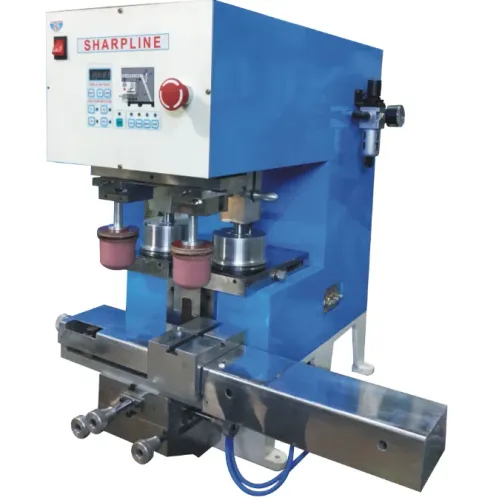
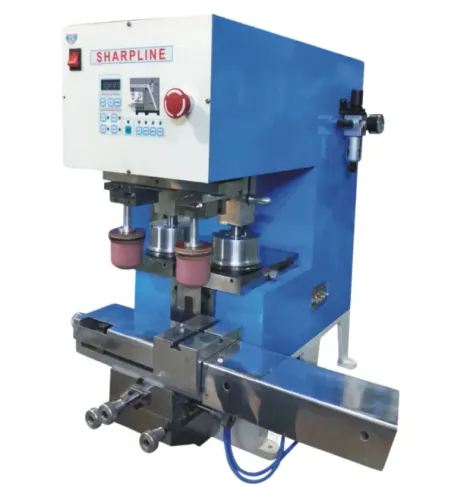
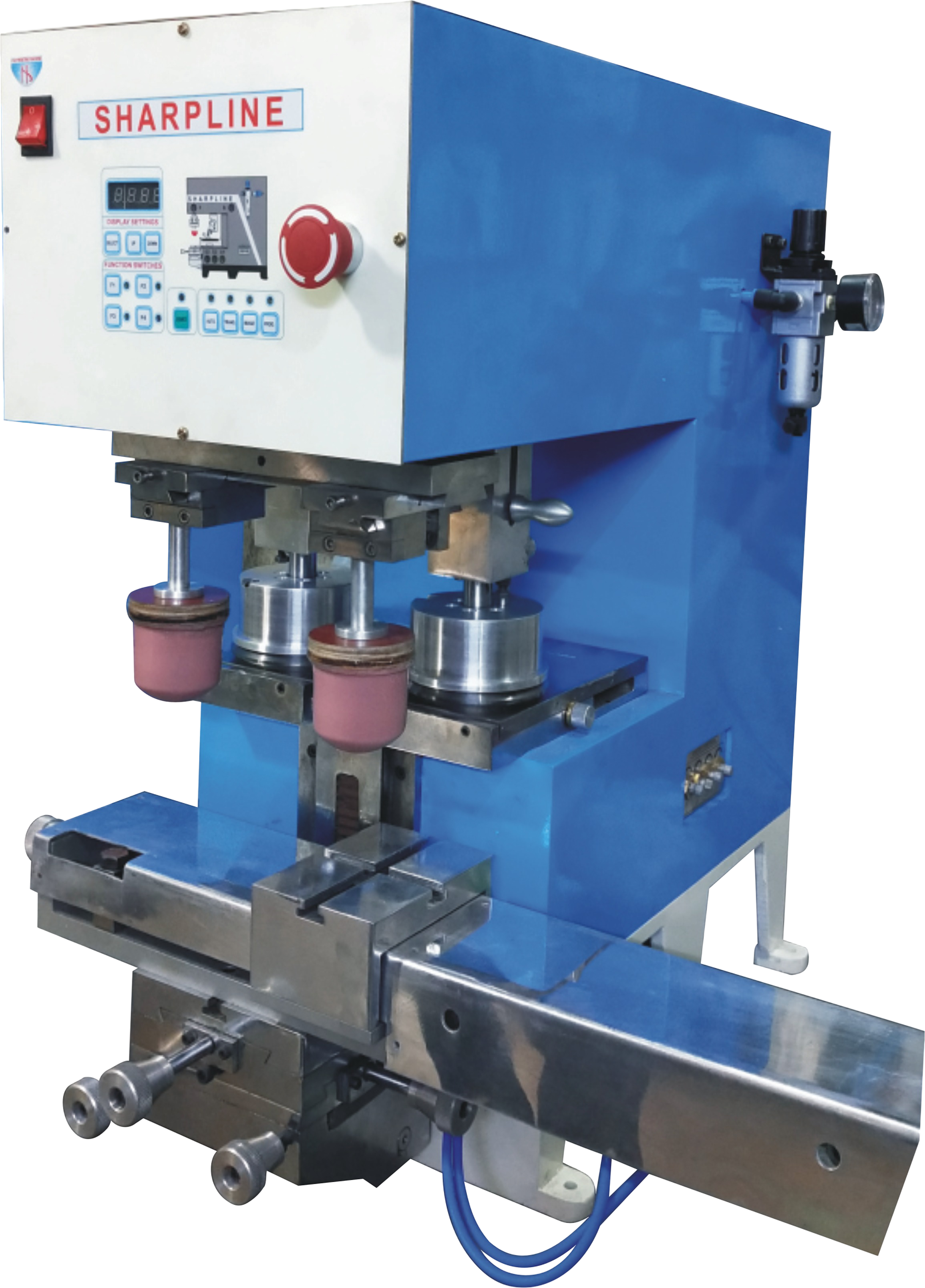
SHARPLINE ENGINEERS becomes useful when the quotation covers a complete line subsystem, including loading, indexing, curing, inspection, guarding, fume extraction, PLC signals, and reject tracking, rather than a standalone print head. A special purpose pad printing machine must also leave clearance for four clichés, ink systems, replenishment, pad replacement, solvent, waste, and maintenance.
Related product
 | SPECIAL PURPOSE PAD PRINTING MACHINE SPECIAL PURPOSE PAD PRINTING MACHINE Our organization is avidly engaged in supplying an exclusive range of Plasto Special Purpose Pad Printing Machine at reasonable prices. View product → |
When four-colour integration is worth the added complexity
Choose integration when the same part family runs at sustained volume, nearly every part needs four colours, and re-fixturing would create registration errors. The four color pad printing machine benefits outweigh dedicated tooling and controls only when curing and inspection fit within takt.
Four color pad printing machines for special purpose production earn their place by removing three locating and handling events, not merely by printing faster.
Reject the integrated layout when you have:
- Low-volume orders or frequent artwork changes that make cliché, pad, nest, and recipe changes frequent.
- Incompatible substrates or unstable adhesion that demand separate pretreatment or ink systems.
- Deep recesses, sharp transitions, or heavy texture that prevent reliable pad contact.
- A wide range of part geometries requiring different nests and clamping arrangements.
- Insufficient service clearance, cleaning access, cure capacity, or inspection time.
Compare the complete process, not the printer stroke rate:
| Option | Accepted parts per hour | Labour and handling | Reject, tooling, and changeover exposure | Line burden |
|---|---|---|---|---|
| Integrated four-colour line | Highest when one family repeats | Removes reloading and re-fixturing | Lower handling rejects; higher dedicated tooling and validation | Requires curing, inspection, clearance, cleaning, and PLC interfaces |
| Two-stage process | Lower if parts wait between stages | Adds transfer and locating work | Easier artwork changes; extra registration risk | Adds work-in-progress and handoff controls |
| Manual loading | Lowest at sustained volume | Highest operator involvement | Flexible tooling; variable registration and reject cost | Simplest controls, but takt depends on handling speed |
Frequently asked questions
Does a four-color pad printing machine print all four colors simultaneously?
Not always. Many systems use four ink cups and clichés with one indexed pad station that transfers each image in sequence, creating four print cycles per part.
How does registration remain accurate on curved or recessed parts?
The machine must control part location, pad travel, fixture repeatability, cliché alignment, and transfer pressure. A dedicated fixture holds the part in the same position for every color.
How do four-color pad printing machines affect takt time?
Count each ink pickup, transfer, pad return, indexing movement, and part-handling step. Four sequential transfers increase the print portion of the cycle unless the machine prints multiple parts per index or runs stations in parallel.
What should you specify before requesting a production-line quotation?
Provide the part drawing, material, surface shape, artwork dimensions, color sequence, registration tolerance, ink requirements, takt time, loading method, inspection method, and available utilities.
When is four-color integration worth the added complexity?
It is worth considering when the product needs multiple registered colors and integrated printing reduces manual handling, separate machines, re-fixturing, or downstream assembly time.
Keywords