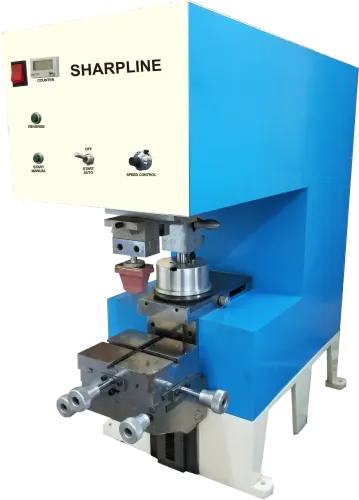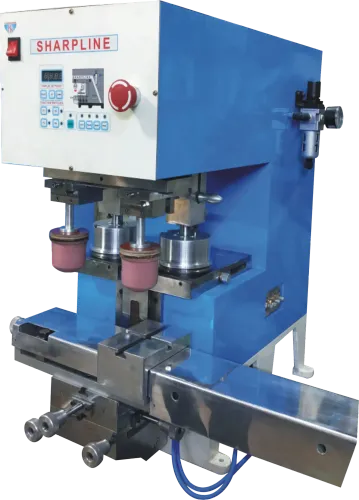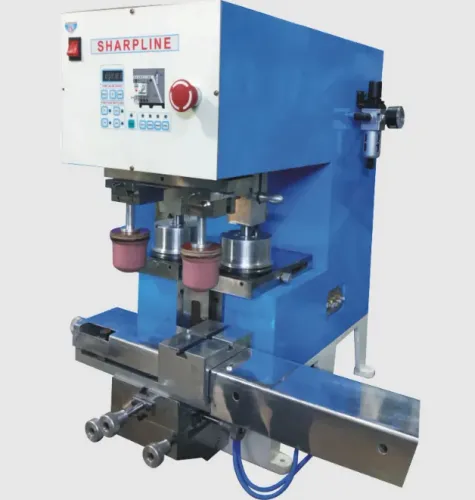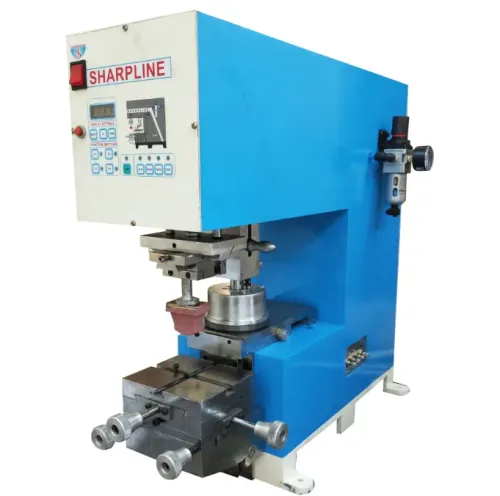
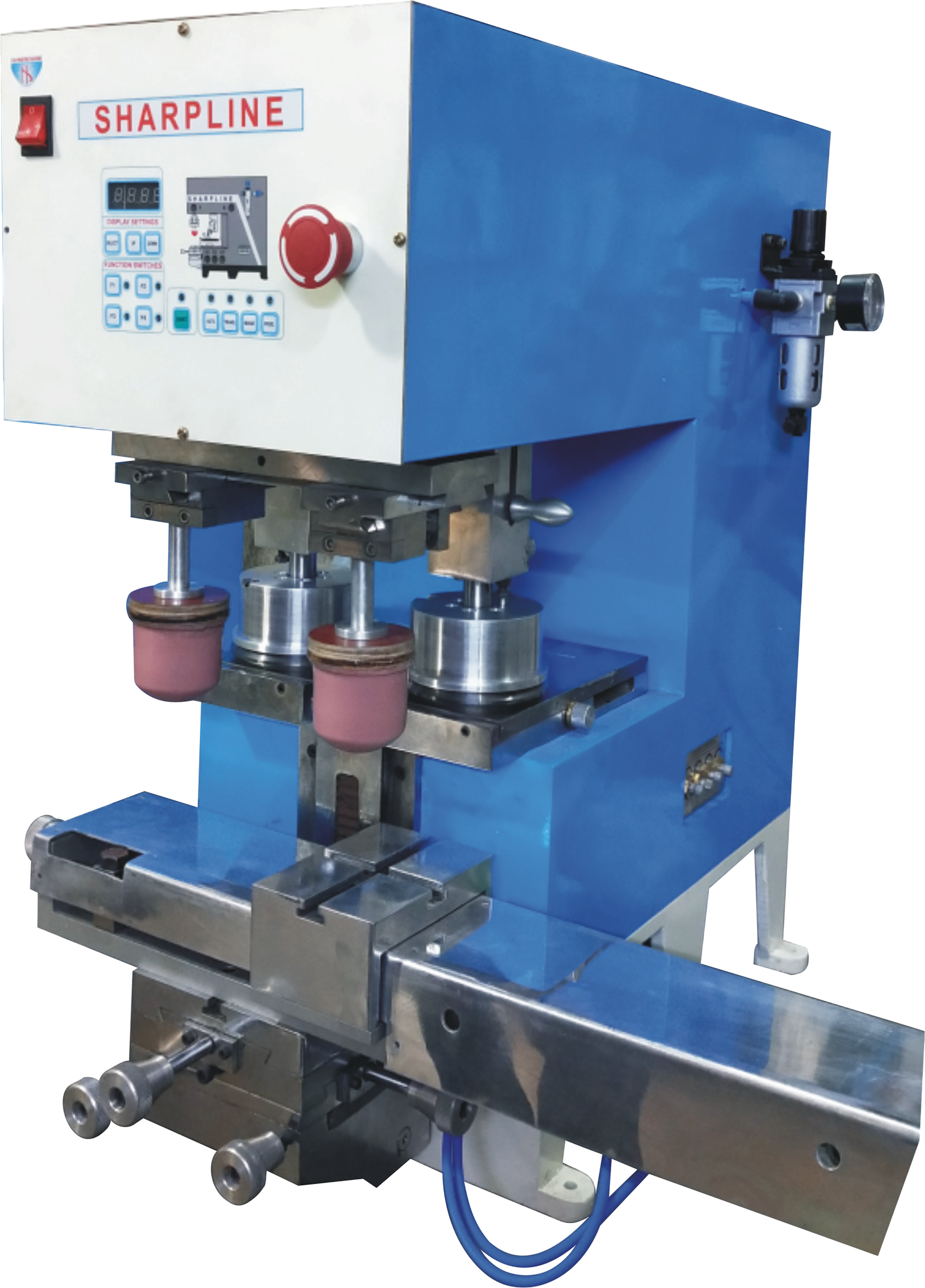
A quotation for double-colour close-ink equipment is incomplete if it says only “two-colour machine.” You need to know which cups, clichés, pads, controls, fixtures, air components, documents and spares arrive with the machine, which items cost extra, and whether the stated capacity suits your part and artwork.
Key takeaways
- Request every supplied component, quantity and compatible dimension in writing.
- Require pad size, cup diameter, plate size and cycle details on the quotation.
- Separate included accessories, consumables and buyer-supplied items before comparing prices.
- Choose close-ink double-colour equipment when sealed ink control suits your production process.
What belongs in the standard double-colour machine package
A standard package names the hardware, not merely “double-colour capability.” Ask the pad printing machine supplier to identify each component supplied, its quantity, and its compatible dimensions before you compare quotations.
- Machine frame, two closed ink cups, two doctoring rings, and two cup holders or carriages
- Two etched cliché plates, with plate size and image area stated
- Printing pads, including quantity, hardness, shape, offset, and the image assigned to each pad
- Pneumatic cylinders, air preparation unit, pressure regulator, lubricator, and gauges
- PLC or cycle controller, operator interface, cycle counter, manual setup mode, and foot pedal or automatic trigger
- Sensors, part-present detection, workholding fixture, and mechanical or electronic colour-registration controls
- Electrical cabinet, guards, manuals, spare parts, and commissioning materials
Do not accept “double color close-ink for equipment included” as a complete scope description. Confirm whether ink, thinner, hardener, retarder, dryer, exhaust, conveyor, and adhesion-testing materials are included; these are often process-dependent extras.
The two-colour layout changes what must be delivered:
| Arrangement | Hardware that must be named | Registration issue |
|---|---|---|
| One carriage, sequential impressions | Two cups, cups holders, clichés, pads | The part or carriage indexes between colours |
| Two indexed printing positions | Two cup assemblies, clichés, pads, fixtures | The fixture transfers the part between stations |
| Multi-image pad arrangement | Purpose-designed pad and matching cliché | Pad geometry controls colour spacing |
The quotation must state which arrangement applies.
The specifications your quotation must state
Require the quotation to state measurable limits, not simply “double-colour capability.” It must say whether two closed ink cups print sequentially at one location or from separate first- and second-colour positions, because that arrangement affects fixture design, registration and cycle time.
Ask for these double-color pad printing machine details:
- Two ink cups, doctoring rings, cup holders or carriages, and compatible cliché dimensions.
- Each cliché’s plate size, usable image area, steel or polymer construction, etch depth, mounting method, and image orientation relative to cup and pad travel.
- Pad quantity, shape, hardness, offset and maximum image size for each colour; two colours in one area usually need two pads or a specified multi-image arrangement.
- Pneumatic cylinder sizes, control type, sensors, colour-registration adjustment, fixture type, part-present detection and whether tooling is included.
- Machine footprint, weight, electrical supply, air pressure, air consumption, cycle speed and stated output at your part’s loading method.
- Dryer scope: flash-off time, hot-air, infrared or UV equipment, exhaust, guarding, conveyor and cure-validation responsibility.
| Specification | Quotation must state | Why it matters |
|---|---|---|
| Printing positions | One location or two indexed locations | Confirms registration and cycle layout |
| Fixture | Nest, mandrel, vacuum or rotary fixture; included or customer-supplied | Prevents unstable placement |
| Image capacity | Maximum diameter or dimensions per colour | Proves your artwork fits |
| Utilities and output | Voltage, phase, pressure, consumption and cycles per hour | Tests plant compatibility and production target |
How the two-colour printing cycle is set up and run
A double color close ink cup pad printing machine needs two etched clichés, two ink cups with doctoring rings, two cup holders, and two matched pads. Confirm whether both colours print sequentially at one position or at separate first- and second-colour positions on an indexed shuttle or rotary table.
That layout determines how registration is achieved.
- First impression: Each cup rolls across its cliché, sealing the etched image with ink while the doctoring ring removes ink from the non-image area. The first pad picks up its colour, descends onto the correctly seated part, and transfers the image into the fixture’s defined location.
- Flash-off: Hold the part in place while the first ink reaches the specified handling condition. Do not assume “dry” means ready; excessive delay can reduce overprint adhesion, while wet ink can smear during indexing or distort the second colour.
- Second impression: The shuttle, rotary table, or fixture returns the part to a repeatable datum. The second pad collects ink from the second cliché and lands against that datum, placing the second image beside or over the first without shifting the part.
Registration depends on the nest, mandrel, vacuum fixture or adjustable part locator, not on the second cup alone. Use mechanical stops, indexed motion, and pad-to-cliché adjustment to correct side-to-side and angular error.
Set separate stroke, dwell, and pad-speed values for each colour when coverage or ink transfer differs. Verify the sensor confirms part presence before either impression and use setup mode to check registration with slow manual cycles.
The equipment checklist: extras, consumables and buyer-supplied items
A quotation is incomplete if “double-colour capability” is the only inclusion. Your pad printing equipment checklist should identify two ink cups, two doctoring rings, two cup holders or carriages, two etched clichés, application-specific pads, the fixture, machine guarding, air preparation, electrical controls, setup tooling, manuals and operator training.
| Category | Checklist items | Confirm before purchase |
|---|---|---|
| Standard hardware | Machine, two cup assemblies, clichés, pads, fixture, controls, sensors and registration system | State dimensions, quantities and whether printing is sequential at one location or uses two indexed positions |
| Optional accessories | Flash-off, hot-air, infrared or UV dryer; exhaust, guarding, conveyor and automation trigger | Identify ink chemistry, cure method and validation responsibility |
| Process consumables | Ink, thinner, hardener, retarder, colour-matching material and cleaning fluid | Specify ink system, mixing ratio, pot life, compatible cliché and adhesion test |
| Buyer-supplied items | Compressed air, electrical supply, approved parts, artwork and production acceptance criteria | Confirm pressure, consumption, voltage, substrate and sample quantity |
Ask for the commissioning pack to include registration samples, setup instructions and cure-test records. Treat spare rings, cups, pads and seals as separately priced long-lead spares unless the quotation explicitly includes them.
“Double color close-ink for equipment included” should never be left to interpretation. Require the supplier to state pad hardness, shape and offset, cliché material and size, and every accessory needed to produce an accepted two-colour part.
When close-ink double-colour equipment is the right specification
Choose a double-colour close-ink machine when two controlled images must register on the same part, solvent exposure needs limiting, and pad printing suits the surface better than a squeegee process. Do not approve a proposal until it states whether one carriage transfers both colours at one location or separate stations print at two indexed positions.
| Option | Best fit | Check before approval |
|---|---|---|
| Double-colour close-ink | Two images, tight registration, moderate image areas | Confirm two cups, clichés, pads, registration controls, separate colour settings, fixture, and drying scope |
| Single-colour | One image or sequential decoration | Compare the added cycle time and tooling cost of a second pass |
| Double-colour open-ink | Lower initial complexity or frequent ink access | Compare solvent exposure, evaporation, cleaning, and ink consistency |
| Three-colour close-ink | Three images in one indexed process | Reject the extra station if the part needs only two colours; verify footprint and changeover time |
| Screen printing | Large, flat images and heavier ink deposits | Choose it when pad access or image area limits transfer; check screens, squeegee travel, and curing |
Your double color pad printing machine details should show maximum image size per colour, cliché dimensions, pad hardness and shape, fixture type, air consumption, and cycle speed. Ask whether the PLC provides separate stroke, dwell, and pad-speed settings; shared settings can distort one colour.
Require the pad printing machine supplier to define dryer, exhaust, guarding, cure validation, spare doctoring rings, and commissioning items. SHARPLINE ENGINEERS can be assessed on that same evidence: compare the written scope, not the catalogue title.
Related product
 | Double Color close ink cup pad Printing Machine Double Color close ink cup pad Printing Machine DOUBLE COLOR CLOSE INK CUP PAD PRINTING Get in touch with us for obtaining high quality Double Color Close Ink Cup Pad Printing as we are a... View product → |
Frequently asked questions
What belongs in a standard double-colour close-ink machine package?
Ask the pad printing machine supplier to list the machine, two ink cups, printing pads, cliché plates or plate holders, fixtures, controls and included accessories with quantities and compatible dimensions.
Which specifications must a quotation state?
Require the quotation to state the number of colours, ink-cup diameter, cliché plate size, pad dimensions, printing area, stroke or cycle details, air pressure requirements, power supply and machine footprint.
How is a two-colour pad printing cycle set up and run?
The first station prints one image, the part indexes or transfers to the second station, and the second pad applies the next image. Confirm registration adjustment, curing time and the sequence used for your part.
What extras and buyer-supplied items should you check?
Check whether the price includes fixtures, plates, pads, inks, solvents, spare seals, tooling and installation. Confirm which consumables, compressed-air equipment, electrical connection and production samples you must provide.
When is close-ink double-colour equipment the right specification?
Choose it when sealed ink cups suit your ink-control, cleanup and operating requirements, and when your parts need two registered colours in one repeatable production cycle.
Keywords