A two-colour print can reduce handling and improve registration, but only when the component, ink system, fixture, and inspection plan support the process. By the end, you will be able to judge the part geometry, compare printing methods, specify validation tests, and decide whether a dual-colour machine earns its place on your production line.
Key takeaways
- Use two colours when one part needs a controlled, registered graphic in one location.
- Validate the part surface, fixture datum, pad shape, and print clearance before choosing equipment.
- Control registration through fixed tooling, repeatable pad travel, and verified colour sequencing.
- Test adhesion, abrasion, chemicals, heat, and light exposure against the vehicle application.
Which automotive components genuinely need two-colour pad printing?
Two colours earn their place when a single automotive part needs a graphic assembled in one controlled location: a white symbol over a black key, a red warning mark inside a contrasting ring, or a two-tone emblem.
Dashboard switches, instrument-panel buttons, bezels, knobs, trim pieces, and moulded housings are strong candidates when rehandling would make registration visibly wrong.
| Option | What it means | When it applies |
|---|---|---|
| Two-colour pad printing | Two etched clichés and ink stations apply both colours during one controlled cycle | Small symbols, rings, emblems, and layered graphics needing consistent registration |
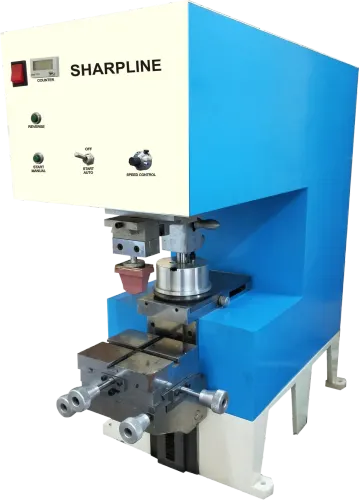
| Single-colour pad printing | One transfer applies one colour to a curved or recessed surface | The graphic has no second colour or registration requirement |
| Screen printing | A screen deposits ink across a broader, flatter area | Large dashboard panels or trim with enough open, accessible surface |
| Laser marking | The laser changes or removes the surface to create permanent contrast | Bare or coated parts that pass appearance and durability trials |
| Hot stamping | Heated foil transfers a decorative or metallic layer | Flat or gently curved trim where foil appearance matters |
| Inkjet or label | Ink is jetted on, or a separate label is applied | Variable data, late-stage identification, or graphics unsuitable for direct printing |
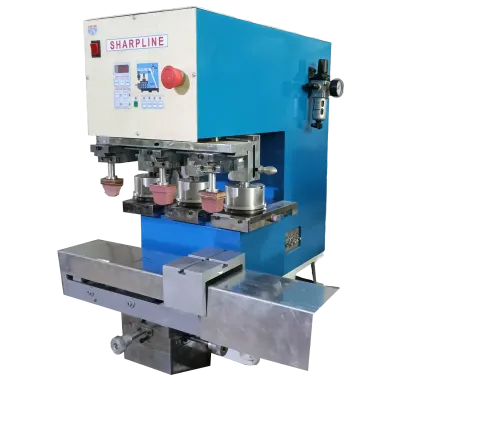
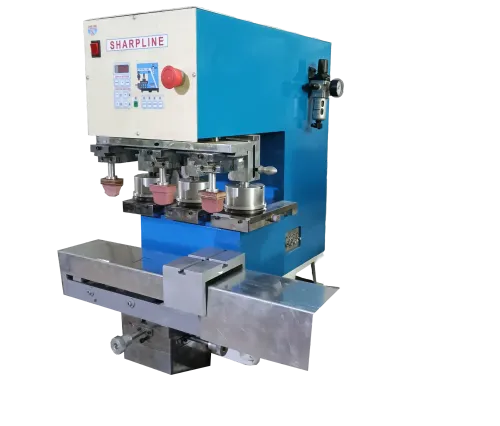
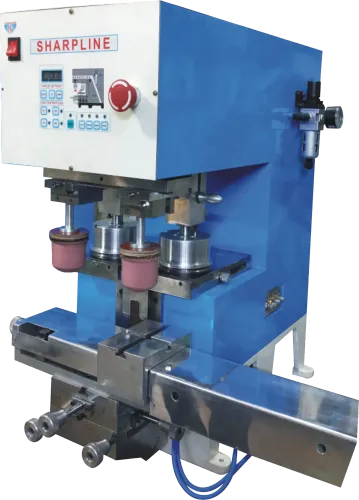
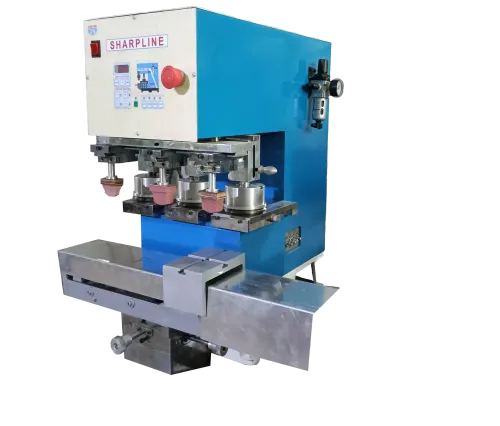
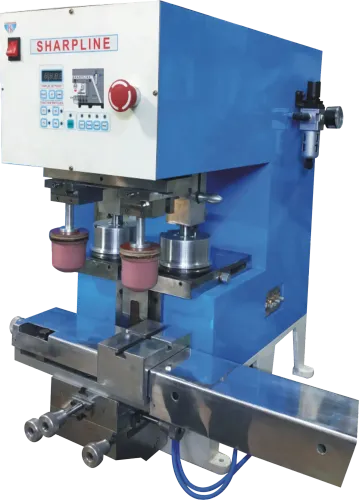
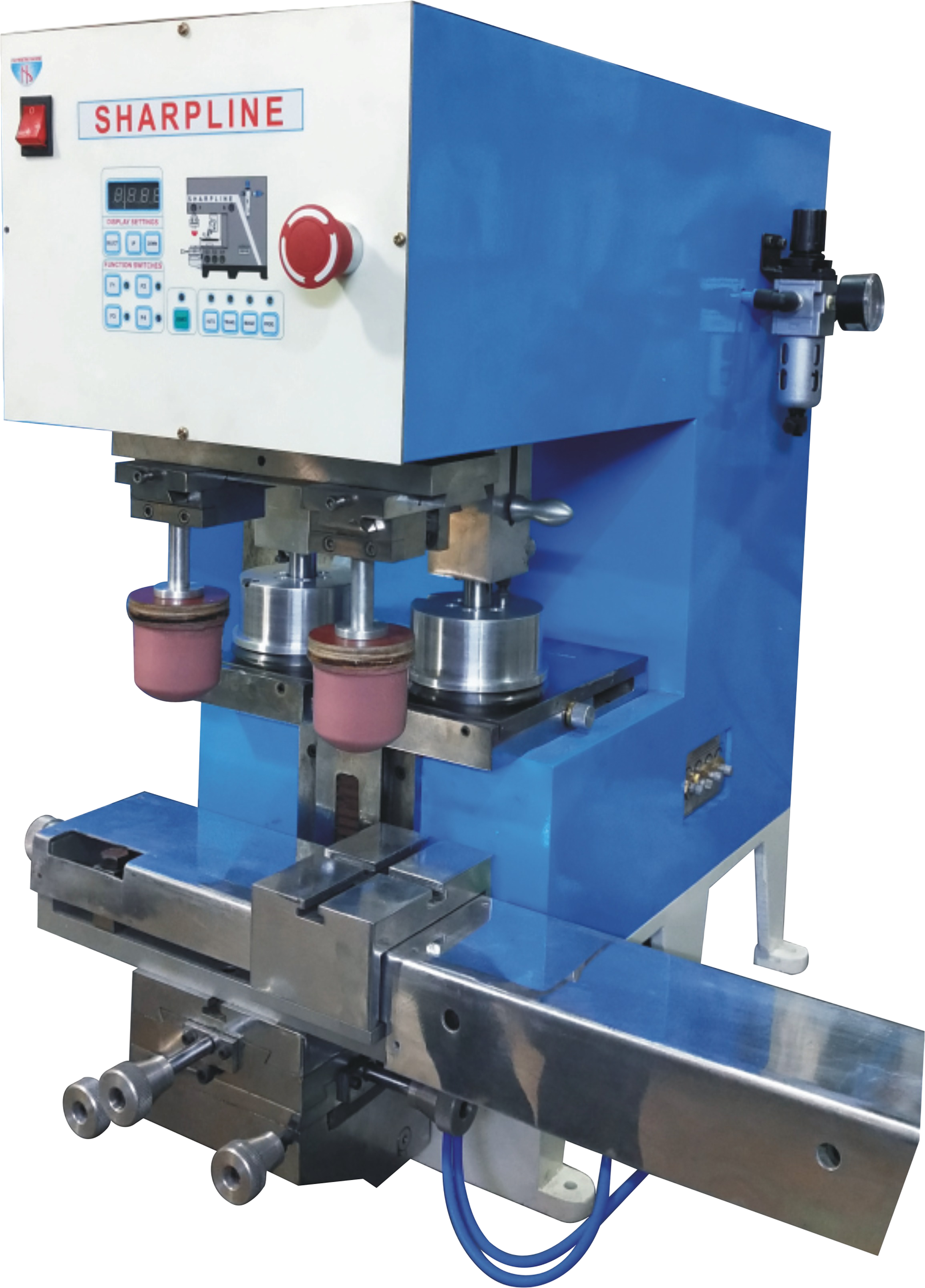
Choose double color pad printing machines for automotive components when two colours must align at the part, not merely appear in the same production plan. If the colours need different pretreatments, drying times, or cure conditions, two separate operations may produce fewer rejects. Test the actual component before approving double color pad printing machines.
Can the part, fixture, and surface support a reliable print?
A reliable print depends on the part, fixture, and surface working together; a capable automotive component printing machine cannot correct poor pad access or unstable location.
1. Confirm the substrate and finish. Unfilled or filled polypropylene, ABS, polycarbonate, TPE, painted plastic, powder-coated metal, and textured surfaces need different ink and preparation. Contamination from mould-release residue, oil, dust, or silicone can cause peeling and pinholes.
2. Map the geometry. Mark curvature, texture, seams, recesses, sharp edges, and draft angles on the print-area drawing. Curves can stretch the image; edges cause incomplete transfer; recesses restrict pad collapse; trapped air creates pinholes; texture reduces ink contact.
3. Define the printable area and orientation. Check that both pads can reach the graphic without touching ribs, walls, or adjacent features. Set the component so the first and second colours remain accessible in the same indexed position.
4. Prove the fixture with representative production parts. Use rigid datums and confirm clearance, repeatable seating, cliché orientation, and pad travel. Fixture wear or inconsistent loading turns a registered logo into colour shift.
5. Test the actual surface, not a flat plaque. Print on parts showing the real texture, draft, coating, and contamination risk, then inspect fine characters and colour boundaries after handling.
Reject the machine choice if the component cannot sit repeatably or the pad cannot contact the full graphic without excessive collapse. A simpler graphic, altered orientation, or different marking process may be more reliable.
How are the two colours transferred and kept in registration?
The two colours stay aligned only when the part, fixture, clichés, pads, and indexing mechanism repeat the same geometry; brochure resolution does not prove registration on your component.
1. Load the component against hard datums in a rigid nest. Clamp without distorting the housing, and confirm that the part seats fully; a loose nest creates error before printing begins.
2. Align the first cliché and pad, ink the image, and transfer it to the stationary part. Check pad collapse: excessive deformation stretches symbols, while poor contact leaves pinholes or incomplete edges.
3. Index the part, or move it to the second station, using the same datum surfaces. Do not rely on gripper position alone; fixture wear, debris, and thermal movement shift the second image.
4. Ink the second cliché and make the second transfer. Confirm whether the machine uses two pads or sequential transfers, because double-colour does not guarantee simultaneous printing or a stated two-colour cycle.
5. Cure the print under the specified time and temperature before handling it. Insufficient cure can smear a correctly registered image.
6. Inspect the finished part at production viewing distance, measuring colour-to-colour offset on the actual logo, ring, warning mark, or text. Then unload and segregate rejects.
Request registration results from representative parts in the production fixture. Measure the edge-to-edge offset at the part, not the machine’s nominal resolution; pad deformation, fixture wear, and part-location repeatability set the usable limit.
What ink and testing plan will survive automotive use?
Select the ink and surface preparation for the actual substrate, then qualify the finished marking after its required exposure sequence. Plastic grade, coating, mould-release residue, texture, and curvature determine whether cleaning, flame treatment, plasma treatment, or a primer is needed; confirm compatibility on production parts, not test plaques.
- Record the substrate, ink system, thinner, cure conditions, and surface preparation in the trial report.
- Run cross-cut adhesion using ISO 2409 where the printed layer and part geometry permit it, followed by abrasion or scratch testing.
- Expose marked parts to the specified oils, fuels, cleaners, and interior chemicals, then apply the required heat, humidity, thermal-cycle, and UV or fading exposure.
- Inspect after the complete sequence for adhesion loss, bleeding, fading, cracking, colour change, and legibility. A pass before conditioning proves little.
- Set acceptance limits with the component or vehicle programme: cross-cut classification, rub cycles, chemical contact time, temperature range, humidity duration, exposure dose, and minimum readable stroke or symbol definition.
A double color open ink well machine can suit deep clichés and frequent ink access, but solvent evaporation during pauses changes viscosity, colour density, dot definition, and drying.
An open ink well pad printing machine therefore needs ventilation based on the ink and thinner safety data sheets, compatible storage, housekeeping, operator-exposure controls, viscosity checks, measured thinner addition, and a cover-or-clean procedure for stoppages. Compare that burden with sealed cups before approval.
When does a dual-colour machine make commercial sense?
A dual-colour machine earns its premium when both graphics must align on one component and the savings in handling labour and rejects exceed the equipment cost.
Two separate operations require relocation between prints, increasing registration error; double color pad printing machines reduce that risk but still need checks for pad deformation, fixture wear, and thermal movement.
| Option | What to compare | Commercial question |
|---|---|---|
| Two-colour machine | Two etched clichés and two ink stations, with simultaneous or sequential transfers | Does the quoted cycle print both colours, or only one? |
| Two-colour machine | Registration measured on the actual component and fixture | Does it meet the visible tolerance for your symbols, rings, text, or warning marks? |
| Separate operations | Loading, unloading, re-fixturing, inspection, and curing between colours | How many labour minutes and relocation rejects does each part add? |
| Either option | Cure temperature, drying time, and ink compatibility | Will one colour’s slower cure hold up the complete cycle? |
| Either option | Ink changes, cleaning, viscosity control, and solvent handling | How often will changeovers stop production? |
| Either option | Accepted parts versus setup and registration rejects | Has the cost of scrap been included in the comparison? |
Ask SHARPLINE ENGINEERS to run both colours on representative production components, using the proposed fixture, ink, cure sequence, and inspection method. Approve equipment only after measuring registration, cycle time including loading and unloading, cure constraints, and reject rates—not the catalogue cycle alone.
Related products
 | Double Color close ink cup pad Printing Machine Double Color close ink cup pad Printing Machine DOUBLE COLOR CLOSE INK CUP PAD PRINTING Get in touch with us for obtaining high quality Double Color Close Ink Cup Pad Printing as we are a... View product → |
 | DOUBLE COLOR OPEN INK WELL PAD PRINTING MACHINE DOUBLE COLOR OPEN INK WELL PAD PRINTING MACHINE We are designated with a position of trustworthy suppliers involved in dealing with Double Color Open Ink well Pad Printing Machine and offering the... View product → |
Frequently asked questions
Which automotive components genuinely need two-colour pad printing?
Two-colour printing suits components that require a graphic assembled in one controlled location, such as a white symbol on a black key, a red warning mark inside a contrasting ring, or a two-tone emblem.
Can the part, fixture, and surface support a reliable print?
A reliable result depends on a clean, printable surface, sufficient clearance, a stable fixture, and repeatable location references that prevent the component from shifting between colour transfers.
How are the two colours transferred and kept in registration?
The machine transfers each colour in a controlled sequence using separate ink cups or plates, a shaped pad, and fixed tooling that holds the part and preserves the same datum for both impressions.
What ink and testing plan will survive automotive use?
Select ink for the substrate and service conditions, then test adhesion, abrasion, chemicals, temperature, and light exposure against the component's real application requirements.
When does a dual-colour machine make commercial sense?
Compare the machine and tooling cost with cycle time, registration consistency, labour, scrap, rework, and the cost of producing the same graphic in separate operations.
Keywords