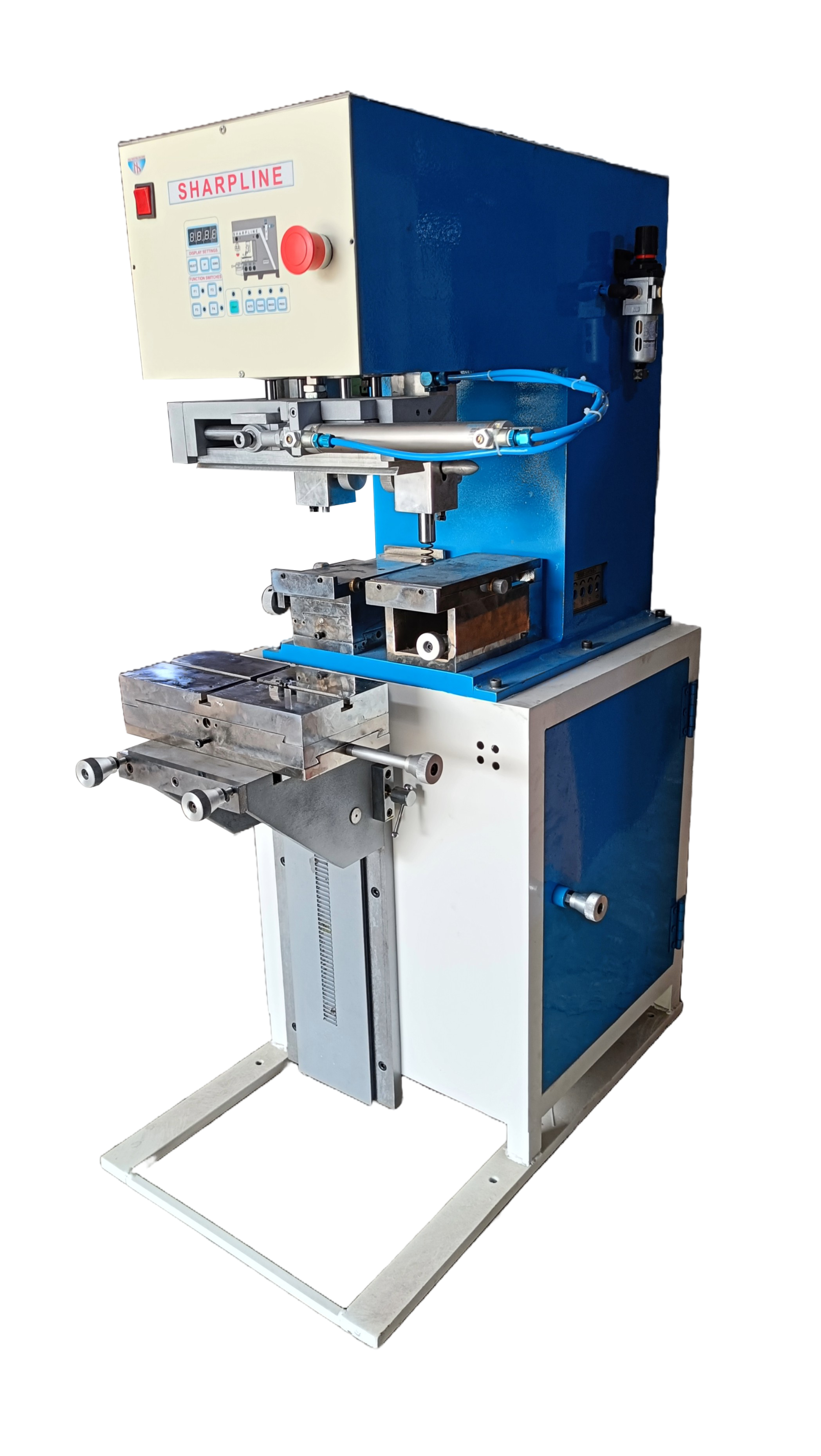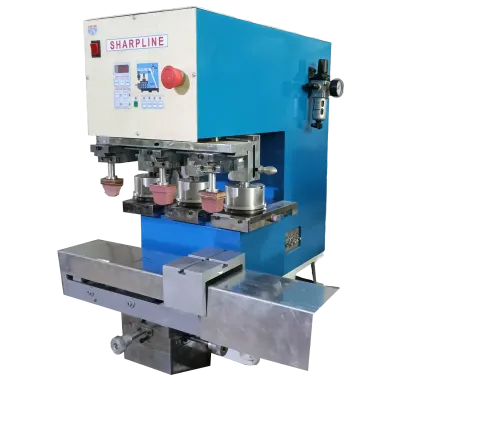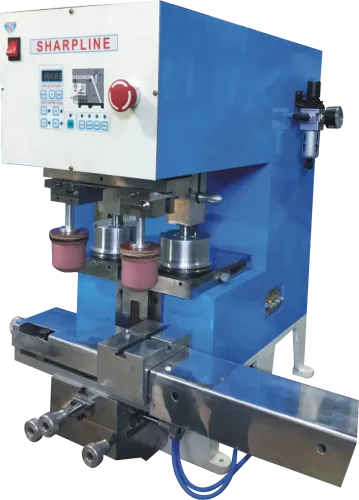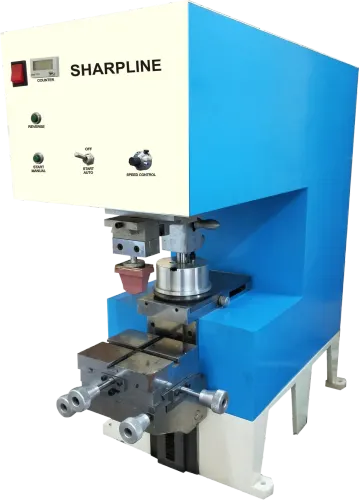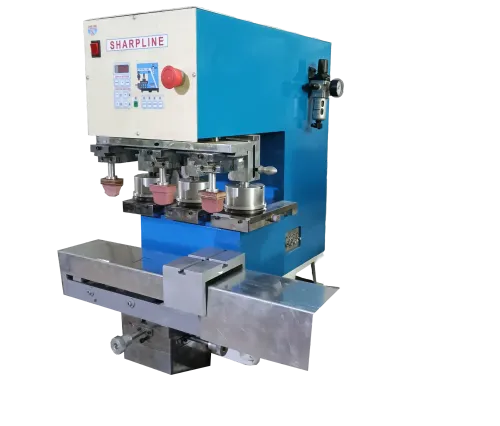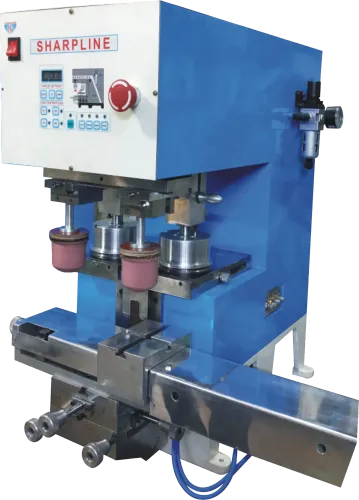
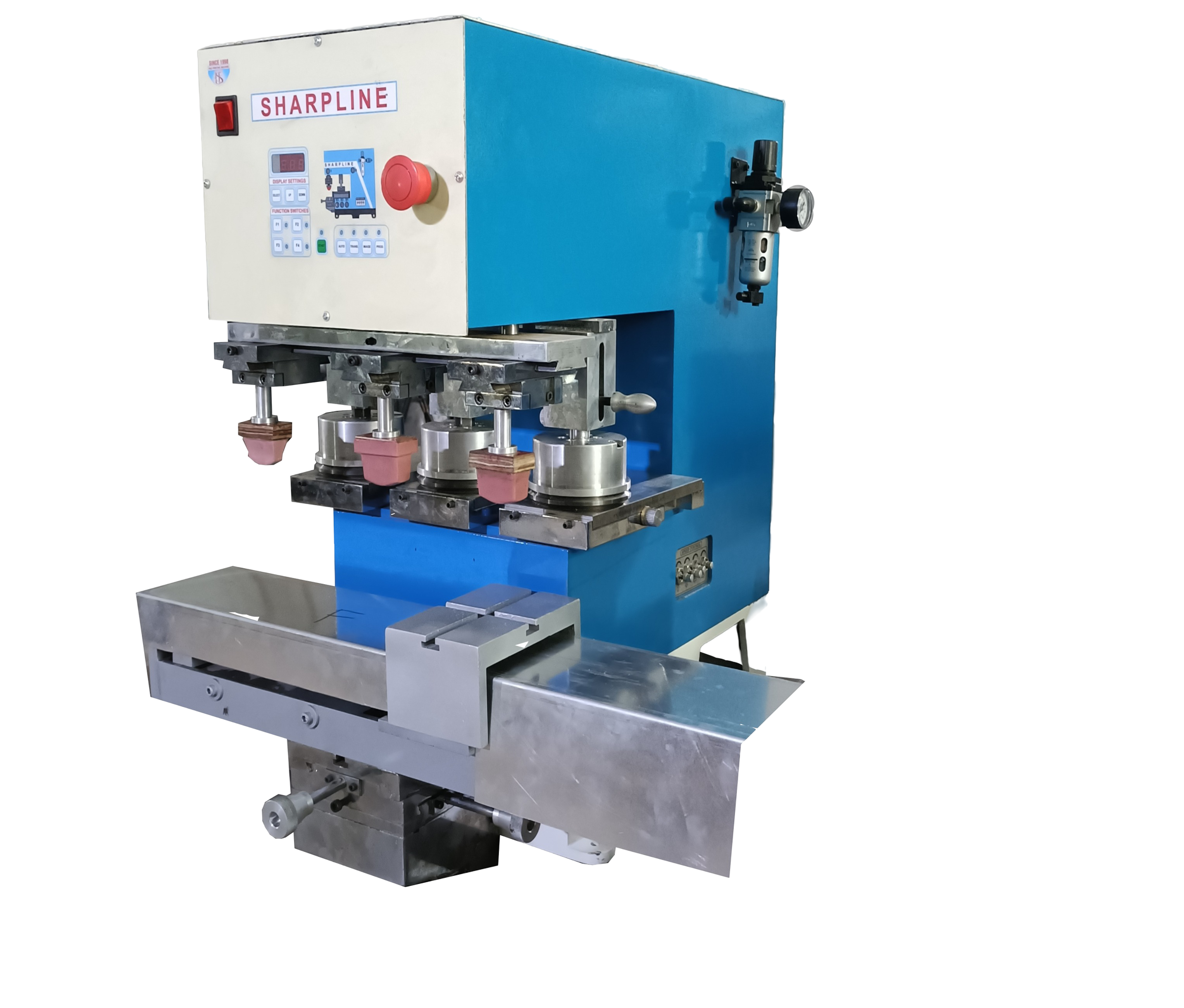
A four-color machine can replace a single-color open ink well machine only when its extra stations reduce the handling, registration work, and cycle time your products require. By comparing the printing sequence, operating trade-offs, ink and fixture demands, and machine specifications, you can decide whether the additional capacity will be used or left idle.
Key takeaways
- Confirm whether four-color capacity means spot colors, CMYK, or both.
- Compare cycle time, setup labor, registration, and reject rates—not color count alone.
- Check pad travel, fixture accuracy, cliché layout, and registration controls.
- Choose an open ink well machine for simple, high-volume single-color work.
What “four color” means—and when it can replace one-color printing
“Four color” normally means four separate ink-and-image channels: four etched clichés, four pads or pad positions, and four ink stations. It does not automatically mean CMYK process printing. Confirm whether the machine handles four opaque spot colors, screened CMYK inks, or both; many four color pad printing machines are built for spot colors.
The layout usually follows one of two patterns:
- Four impressions land on one part held in an indexed fixture.
- The part moves through separate printing stations, with each station applying one color.
A four color machine can replace one-color printing when the part needs four deposits in one cycle, or when avoiding repeated loading, unloading, and registration work offsets higher capital, setup, cleaning, and maintenance costs. It is a poor replacement for predominantly one-color work because three ink stations and their related capacity remain unused.
Compared with a single color open ink for well machine, the extra capacity only pays when the job uses it.
Before comparing cycle rates, ask what the number includes. Require the supplier to state whether it covers all four strokes, part indexing, pad return, ink pickup, and intermediate drying.
Check the machine in this order:
- Confirm the artwork needs four spot colors or genuine CMYK screening.
- Identify whether one fixture completes all deposits or operators move the part between stations.
- Calculate whether the saved handling and registration time exceeds the four-color machine’s added cost.
- Test the complete cycle on production parts, including drying between colors.
How the production trade-off changes from one color to four
A single-color job may finish in one transfer, while four-color work takes one indexed cycle or several passes, depending on the machine layout. The trade-off is best seen across the production variables:
| Option | Production effect | Main cost or risk |
|---|---|---|
| Single color open ink well machine | One pass, one cliché, one pad, and one ink station | More loading and unloading when a part needs several colors |
| Four color pad printing machines | One fixture can receive four indexed impressions, reducing manual handling | Four ink viscosities, four pad conditions, four cliché positions, and tighter registration control |
| Multiple-pass four-color layout | Uses separate stations or repeated transfers | Extra handling, drying time, and opportunities for part movement |
A four-color setup reduces operator touches but expands setup and changeover. Cleaning four image stations takes longer, and changing artwork means resetting four clichés, pads, ink conditions, and registration points instead of one.
An open ink well pad printing machine gives rapid visual access and accommodates larger ink volumes, but exposed solvent-based ink evaporates, picks up contamination, and needs viscosity adjustment. The operator also faces more solvent contact, doctor-blade cleaning, ventilation demand, and ink replenishment; four open wells multiply those tasks.
Ink consumption rises with four reservoirs and more cleaning waste.
The four-color line also occupies more floor space and can require greater compressed-air and electrical capacity. On short runs or in a constrained work area, those costs can outweigh a faster nominal cycle.
Choose the larger system when fewer handling steps offset its higher setup and maintenance burden; otherwise, the simpler machine may deliver the lower total production cost.
How to keep four colors registered on the actual part
Registration on the actual part depends more on repeatable fixturing and controlled transfers than on the number of ink stations. Four color pad printing machines cannot correct part movement, poor cliché alignment, pad deformation, or inconsistent stroke settings.
- Separate the artwork into four spot-color files, then confirm whether the job uses opaque spot colors or screened CMYK process colors.
- Prepare each cliché at the specified thickness and inspect its etched image, depth, damage, and holder position. A small offset in one cliché becomes a visible color shift on the part.
- Select compatible inks and pads for the substrate, image size, and surface shape. Record pad diameter, hardness, pickup condition, and usable stroke.
- Load the part into a fixture that locates every datum and prevents rotation, lift, or side movement. Test repeated loading before printing.
- Set pad-to-part and pad-to-cliché alignment, then verify clearance between every pad, cliché, fixture, and part feature. Review the pad printing machine specifications for stroke and pressure ranges.
- Establish the color sequence and validate intermediate drying with production ink. A later pad can disturb an uncured first color; excessive flash time can weaken intercoat adhesion.
- Run test prints through the complete cycle, including any separate drying or curing equipment.
Inspect production parts for intermediate drying, final cure, rub resistance, tape adhesion, chemical resistance, and color-to-color registration. Record the allowed registration tolerance, test registration after curing, and confirm how misprinted parts will be reworked before approving the process.
When a single-color open ink well machine is still the better choice
Choose a single color open ink well machine for one-color logos, low production quantities, frequent ink changes, limited floor space, or limited capital. It is also the safer production choice when the part cannot tolerate repeated handling and indexing, because one fixture load can complete the print.
Short runs reward simplicity. A single color open ink well pad printing machine avoids unused stations, four-color alignment, and lengthy cleaning between multiple ink systems. The exposed reservoir also gives quick visual access and suits larger ink volumes or high-consumption images.
Do not choose an open ink well system for:
- Long unattended runs where solvent evaporation changes viscosity
- Tight color consistency over an extended production period
- Work exposed to dust or contamination
- Processes that create high operator exposure to solvent-based ink
- Jobs requiring stable ink condition without frequent adjustment
A sealed ink cup reduces exposed ink, evaporation, and operator contact, but it is not universally superior. Compare the systems against your ink, image size, run length, substrate, and safety controls.
| System | Strength | Constraint |
|---|---|---|
| Open ink well | Large reservoir, rapid visual access, larger-image flexibility | Evaporation, contamination, solvent exposure, and more cleaning |
| Sealed ink cup | Lower exposed ink and steadier ink condition | Cup-ring wear, alignment sensitivity, scraping force, and image-area limits |
Frequent color changes can favour the open system because cleaning one station is faster than resetting four. For long runs demanding repeatable viscosity, a sealed cup can justify its higher mechanical complexity.
Which specifications prove that four-color capacity will pay off
A four-color machine pays off only when four deposits, daily volume, or registration savings justify its added stations. Compare it with a single color open ink for well arrangement across the same job:
| Option | Production effect | Cost or risk |
|---|---|---|
| Four color pad printing machines | One fixture can receive four deposits with less handling | Higher setup, cleaning, air, electrical, and maintenance demands |
| Single-color machine | One deposit per pass with simpler changeovers | Extra loading, unloading, and registration work for multicolor parts |
Request these pad printing machine specifications in writing:
- Maximum image area per color, with confirmation that the stated size applies to all four colors, not only one station
- Cliché dimensions and thickness; pad diameter and usable stroke
- Maximum part height and complete fixture envelope
- Print-force or pneumatic-pressure range
- Indexing repeatability and measured color-to-color registration
- Four-color cycle time, including all strokes, indexing, pad return, ink pickup, and drying
- Air consumption, electrical load, controls, and guarding
Run your actual parts, substrate, artwork, and fixture before approving the purchase. Ask for registration results against your allowed tolerance, then test rub resistance, tape adhesion, chemical resistance, and final registration after the complete drying or curing schedule.
SHARPLINE ENGINEERS becomes useful when it documents these results and separates a genuine four-color production gain from unused capacity. Reject a machine whose sample uses a smaller image, flatter part, or easier ink than your production job.
Related products
 | DOUBLE COLOR OPEN INK WELL PAD PRINTING MACHINE DOUBLE COLOR OPEN INK WELL PAD PRINTING MACHINE We are designated with a position of trustworthy suppliers involved in dealing with Double Color Open Ink well Pad Printing Machine and offering the... View product → |
 | SINGLE COLOR OPEN INK WELL PAD PRINTING MACHINE SINGLE COLOR OPEN INK WELL PAD PRINTING MACHINE As we are the name on which the customers lay their trust for quality, as we are supplying the finest Single color open ink well pad printing... View product → |
Frequently asked questions
What does four-color capacity mean in pad printing?
It means four separate ink-and-image channels, usually with four clichés, pads or pad positions, and ink stations. Confirm whether the machine uses opaque spot colors, screened CMYK inks, or both.
Can a four-color pad printing machine replace a single-color open ink well machine?
Yes, when the product needs multiple colors or one machine must handle several color sequences. A single-color open ink well machine remains the better fit for simple, high-volume marks with no multicolor registration requirement.
How do you keep four pad-printed colors registered?
Use an accurate fixture, stable part location, matched pad movement, correctly positioned clichés, controlled ink viscosity, and repeatable transfer pressure. Test registration on the actual production part, not only on a flat sample.
Which specifications should you compare before buying?
Compare cycle time for the complete four-color sequence, number and layout of ink stations, pad travel, cliché size, maximum image area, fixture accuracy, registration adjustment, drying time, and changeover requirements.
Keywords