A closed ink cup system is not defined by its cup diameter or headline print speed alone. You need to match the cup, ring, cliché, pad, fixture, ink, and machine movement to your actual part, then verify output and registration through a documented trial before comparing supplier quotations.
Key takeaways
- Choose a closed cup for cleaner ink control and repeatable plate wiping.
- Test your largest part, artwork diameter, pad stroke, and fixture before ordering.
- A double-colour machine needs two clichés, cups, pads, and controlled transfer steps.
- Demand spare doctor rings, setup data, training, and local service commitments.
How a closed ink cup completes one printing cycle
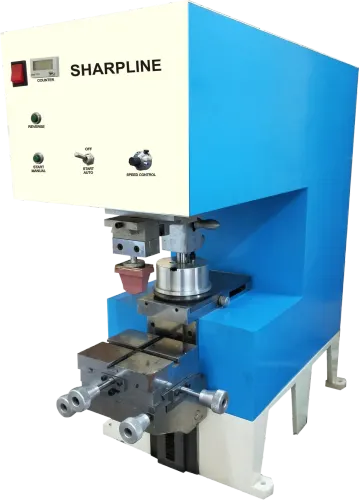
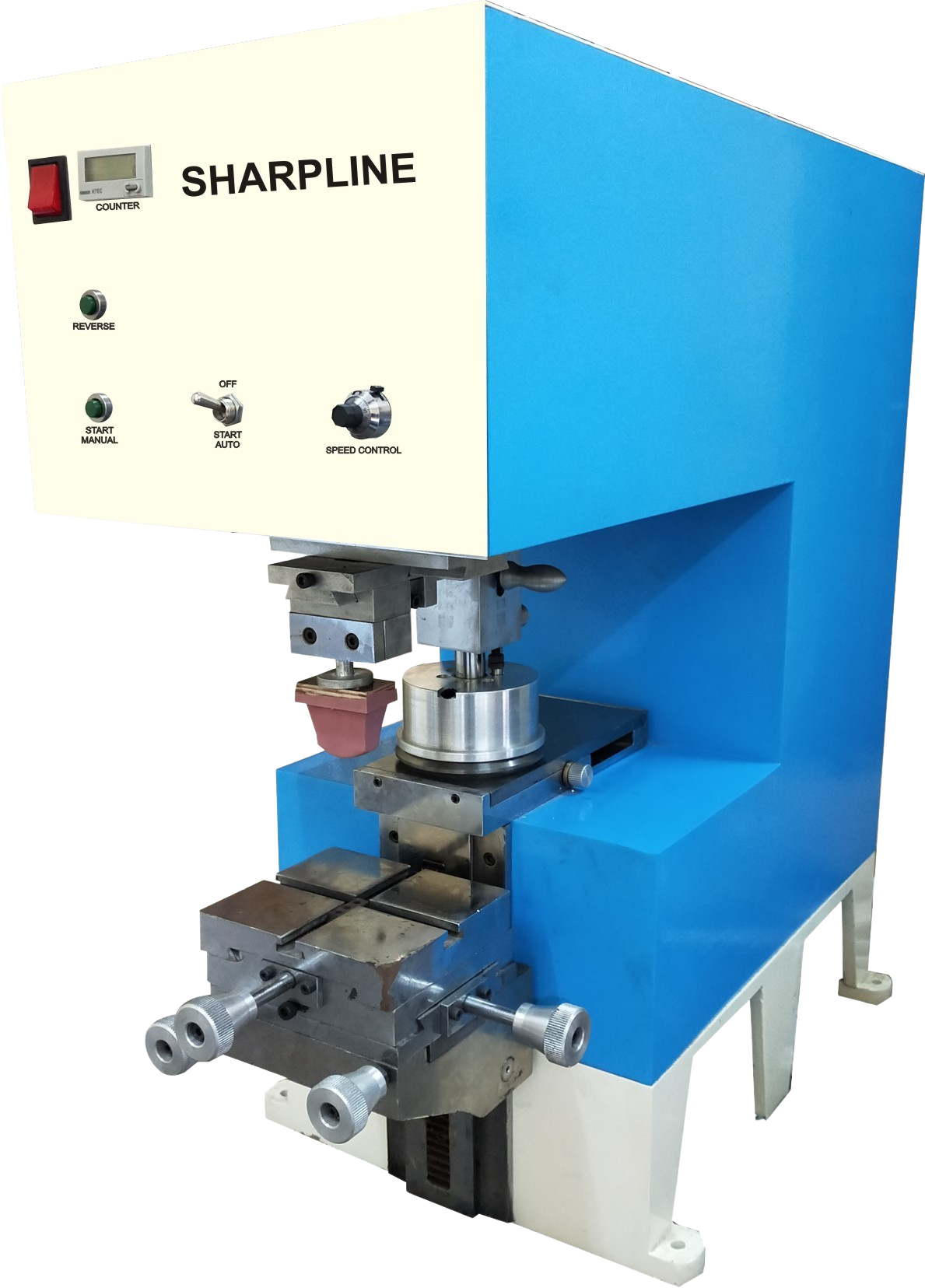
A closed cup is filled with ink and placed over the etched cliché, with its ceramic or carbide doctor ring pressed against the plate. As the cup travels across the cliché, the ring wipes away excess ink and leaves ink only inside the recessed image. The cup is both reservoir and metering device.
The silicone pad descends onto the etched image, deforms against the cliché, and lifts the ink. It then moves over the fixture, compresses against the finished part, and releases the image. After production or a colour change, clean the cup, ring, cliché, and pad before dried ink alters the next impression.
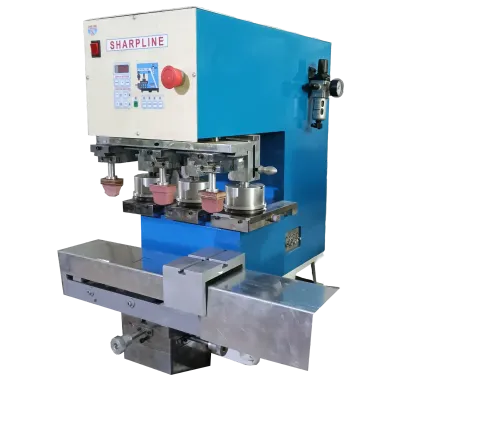
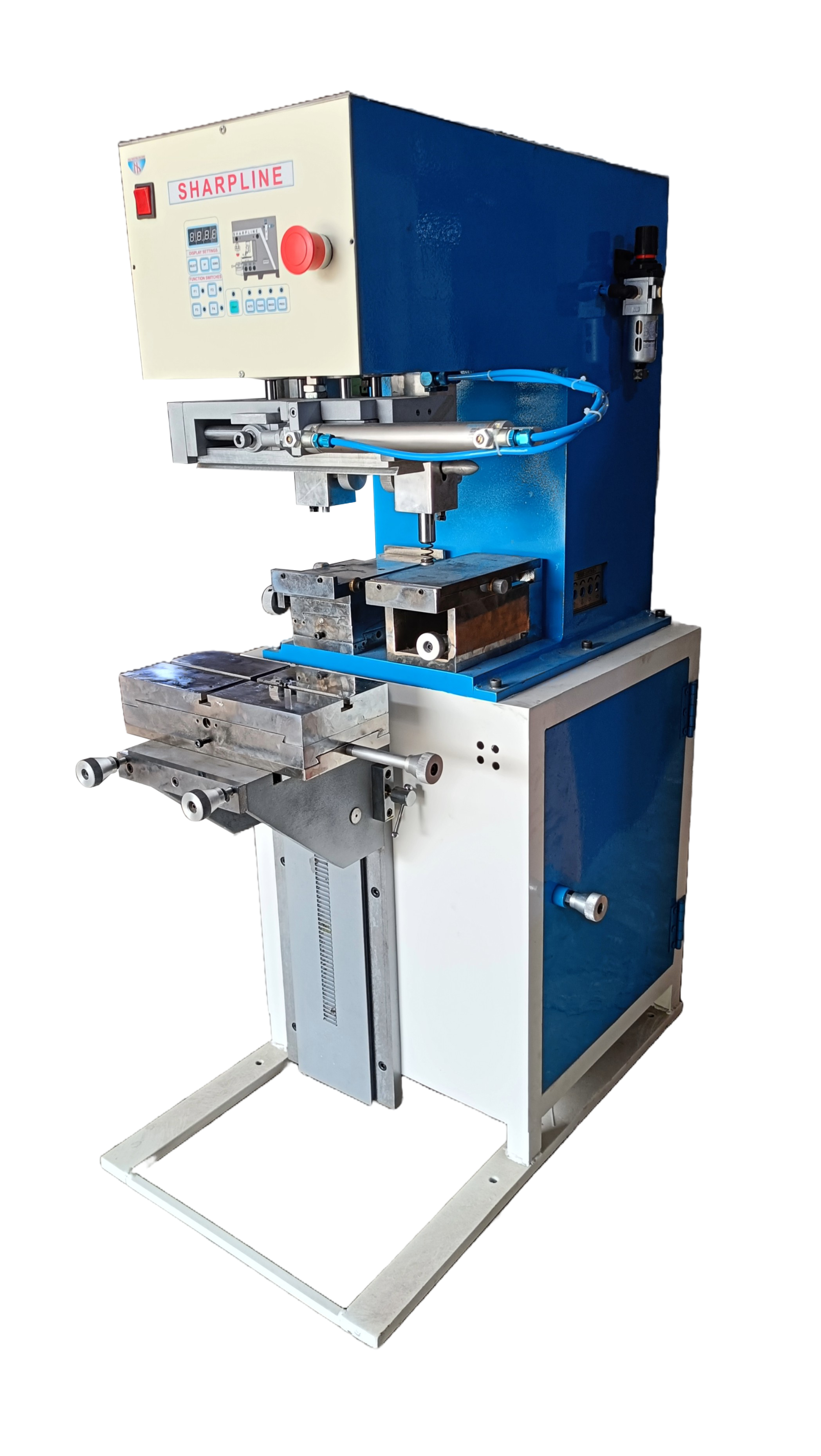
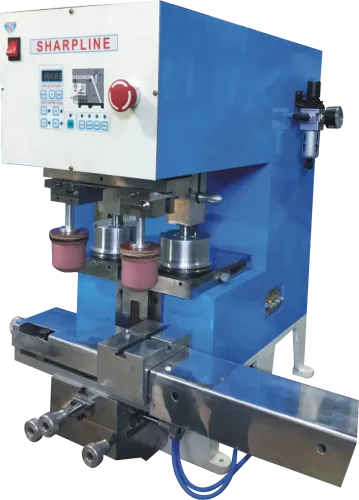
Closed ink cup printing equipment must match the part, ink, and cliché format.
- Keep the cliché flat and free of scratches, burrs, dried ink, and unsuitable coatings; a poor seal causes leakage, halos, and incomplete wiping.
- Inspect the doctor ring for chips, nicks, contamination, and uneven wear; these defects create streaks and inconsistent ink films.
- Set pad pressure, stroke, speed, and position so the pad picks up the complete image without distortion and contacts the part evenly.
| Component | Quality control | Visible failure |
|---|---|---|
| Doctor ring | Ink film thickness and sealing | Streaks or leakage |
| Cliché | Image depth and flatness | Weak or incomplete image |
| Silicone pad | Pickup, release, and shape | Smearing or missing detail |
| Fixture | Part position and repeatability | Registration drift |
Closed cup or open well: which system fits your production?
Choose a closed cup when solvent control, lower ink waste, repeatability, or long unattended runs outweigh its higher changeover and consumable demands. An open well suits short jobs, frequent colour changes, and skilled operators who can manage viscosity and wiping by hand.
| Option | Solvent and ink use | Labour and production fit |
|---|---|---|
| Open well | More evaporation and exposed ink; higher top-up and waste risk | Fast colour changes, but operator skill is critical |
| Closed cup | Less exposure and lower routine consumption; ink can still thicken during long pauses | Consistent runs and unattended production, with viscosity checks |
A closed cup does not eliminate cleaning. During every colour change or shutdown, clean the cup interior, ceramic or carbide doctor ring underside, cliché, pad, and nearby tooling. Colour changes can take longer because the cup, ring, and ink circuit need controlled solvent cleaning.
The ring is a wear part: damage causes halos, streaks, leakage, and incomplete wiping. Ask a closed ink cup systems pad printing machine supplier to specify ring material, service life, spare availability, pause-time viscosity control, and the exact ink, thinner, pad, cliché, and substrate combination.
Include ventilation, solvent safety, guarding, and pneumatic isolation in the decision.
Prove that the machine fits your part and 75 mm artwork
Do not accept “75 mm capability” until the supplier proves that 75 mm is the usable etched image, not the cup diameter. Send the exact part, surface finish, drawing, and image location to a closed ink cup pad printing machine supplier.
1. Ask for a cliché drawing showing the 75 mm artwork, plate thickness, image margins, and clamping position. Confirm the machine’s stroke and pad face can cover the image without distortion.
2. Run the actual part through the machine. Check pad clearance at pickup, transfer, and retraction; a recessed or curved area may need a different pad shape, cup diameter, or stroke.
3. Print 30 consecutive parts from one fixture without resetting it. Measure image position against your tolerance. Variation exposes weak locating stops or fixture flex.
4. Test the exact substrate and finish with the proposed ink, thinner, pad, cliché, and cleaning process. Check adhesion, flexibility, opacity, chemical resistance, and drying after handling.
5. Record pad height, cup position, stroke, pressure, speed, and dwell. Have the operator deliberately remove and refit the fixture, then reproduce the print. Reject the machine if adjustment depends on guesswork or the ring fails to seal on the specified flat cliché.
Ask for the trial parts and settings sheet with the quotation, not after installation.
What single-, double-, and three-colour machines actually do
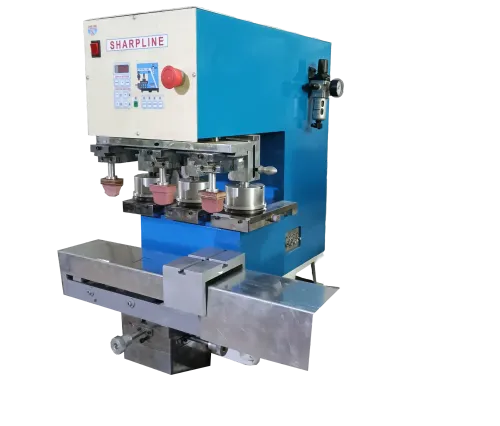
A single-colour machine makes one image transfer per cycle. A double color closed ink cup machine may use two cups, clichés, and pads, but that does not mean simultaneous printing: it may print the colours sequentially, index the part between stations, or move the part through a shared transfer sequence.
Three-colour machines add another timed impression or station.
| Option | How colours are printed | How registration is controlled |
|---|---|---|
| Single-colour | One cliché and one pad transfer one image | Fixture location and machine repeatability |
| Double-colour | Two sequential impressions, or two stations working in sequence | Part indexing, fixed stations, or a transfer mechanism |
| Three-colour | Three timed impressions or stations | Indexing accuracy plus registration marks or fixture datums |
Ask the supplier to demonstrate the exact sequence on your part. Check the gap between impressions: if the first ink remains wet, the second pad can lift, smear, or distort it.
Test output rather than accepting the advertised hourly range:
- Run the machine for a timed 60-minute trial after setup and warm-up.
- Count accepted parts, not pad strokes or theoretical cycles.
- Record misprints, rejected parts, refills, pauses, cleaning, and fixture loading.
- Measure colour registration at the beginning, middle, and end of the run.
- Repeat after a planned pause to expose ink thickening and restart errors.
The usable figure is accepted, correctly registered parts per hour with your operator, ink, fixture, and changeover procedure.
Specify the consumables, controls, and maintenance before commissioning
Before commissioning, put every consumable and control in writing. A quotation for closed ink cup printing equipment must identify the ring material, cup size, accepted cliché format and thickness, pad hardness and shape, ink system, thinner ratio, and spare quantities. Specify the fixture and holder as well; poor repeatability turns setup time into rejected parts.
| Item | Specify | Ownership risk |
|---|---|---|
| Doctor ring | Ceramic or carbide; approved ink compatibility; replacement stock | Chips cause halos, streaks, leaks, and rapid cliché damage |
| Cup and cliché | Cup diameter, plate flatness, surface condition, clamping method | Scratches or dried ink prevent sealing |
| Pad, ink, thinner | Pad geometry and hardness; substrate-tested ink; measured thinner ratio | Poor adhesion, weak opacity, swelling, or excess solvent |
| Air and controls | Filtered, regulated air; pressure gauge; adjustable stroke, speed, dwell, and cup travel | Moisture or unstable settings create inconsistent transfers |
| Cleaning and spares | Solvent, wipes, ring, pad, cliché, and cup cleaning tools | Unpriced changeovers inflate the real operating cost |
Write a shutdown procedure that cleans the cup interior, ring underside, cliché, pad, and tooling. Inspect the ring for nicks, check the cliché for burrs and dried ink, record settings after each approved trial, and replace contaminated solvent before it affects adhesion. Keep the maintenance interval and spare-part availability in the commissioning file.
What a nearby supplier must prove before you place the order
Do not choose a pad printing machine supplier near me solely because its address is nearby. Compare documented support, trial evidence, and the cost of a production-ready installation, not the base-machine price.
| Check | Evidence to demand | Reject if |
|---|---|---|
| Local support | Ring and cup stock, named technician, response time, installation and operator training | “We will arrange it” with no time or contact |
| Sample trial | Your parts, 75 mm artwork, ink, pad, cliché, fixture, and written results | Supplier tests a substitute component |
| Tooling and spares | Fixture drawings, cliché holders, pads, spare rings, cup compatibility, and ring life for your ink | Consumables are unspecified or unavailable locally |
| Safety and utilities | Guarding, emergency stop, solvent-handling instructions, air pressure, filtration, and electrical requirements | Installation depends on an unconfirmed air or power supply |
| Installed cost | Machine, tooling, cups, rings, pads, clichés, ink, thinner, cleaning equipment, freight, installation, training, and taxes listed separately | Quote shows only the machine |
Ask the closed ink cup systems pad printing machine supplier to demonstrate colour-change cleaning: cup interior, ring underside, cliché, pad, and fixture. A chipped ring can create halos, streaks, leakage, or uneven ink film, so request replacement stock and expected service life.
SHARPLINE ENGINEERS should be judged by the same evidence: a documented trial and a service commitment beat proximity.
Related products
 | Double Color close ink cup pad Printing Machine Double Color close ink cup pad Printing Machine DOUBLE COLOR CLOSE INK CUP PAD PRINTING Get in touch with us for obtaining high quality Double Color Close Ink Cup Pad Printing as we are a... View product → |
 | THREE COLOR CLOSE INK CUP PAD PRINTING MACHINE THREE COLOR CLOSE INK CUP PAD PRINTING MACHINE Keeping in consideration the latest standards, we are involved in supplying only high quality Three Color Close Ink Cup Pad Printing Machine at... View product → |
Frequently asked questions
How does a closed ink cup complete one printing cycle?
The cup wipes excess ink from the etched cliché, leaving ink in the recessed artwork. The silicone pad picks up that image and transfers it to the part.
Should you choose a closed ink cup or open ink-well system?
Choose a closed cup for cleaner operation, lower exposed-ink volume, and consistent metering. Choose an open well when you need a large ink reservoir, frequent colour changes, or a simple low-volume setup.
How can you prove a machine fits a part and 75 mm artwork?
Run a sample test using the production part, intended ink, cliché, pad shape, fixture, and 75 mm artwork. Check image coverage, distortion, registration, adhesion, cycle time, and clearance.
What must a nearby pad printing machine supplier prove before ordering?
Ask for a documented sample approval, machine specifications, consumable list, commissioning plan, operator training, spare-parts availability, and response times for local service.
Related products
 | Motorised Pad Printing Machine Motorised Pad Printing Machine Single color, Non-Magnetic Tungsten carbide steel ring & compact sealed Ink cup Pad Printing machine Max. View product → |
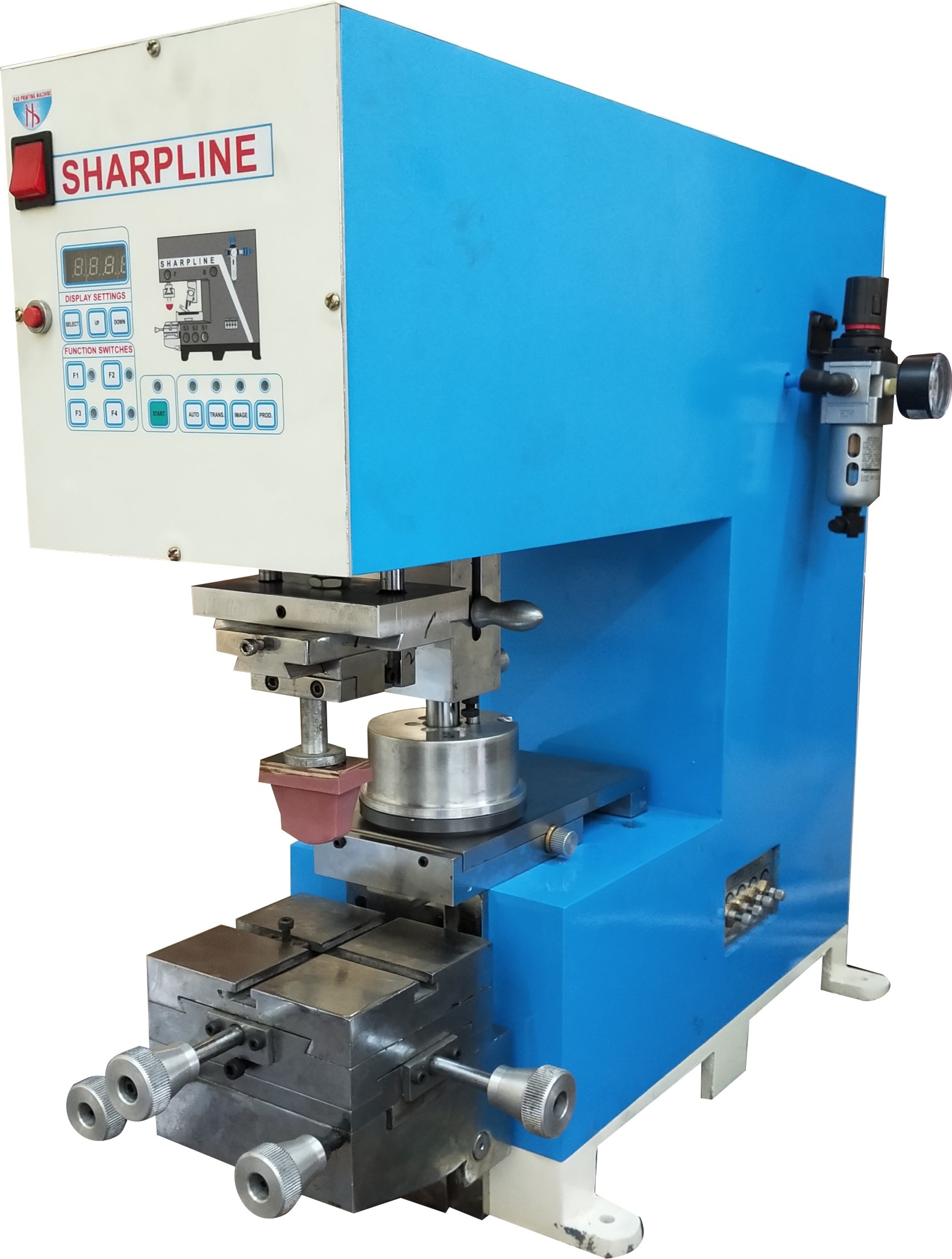 | SINGLE PAD PRINTING MACHINE Single color, Non-Magnetic Tungsten carbide steel ring & compact sealed Ink cup Pad Printing machine Max. View product → |
 | PNEUMATIC PAD PRINTING MACHINE PNEUMATIC PAD PRINTING MACHINE Single color, Non-Magnetic Tungsten carbide steel ring & compact sealed Ink cup Pad Printing machine Max. View product → |
Keywords