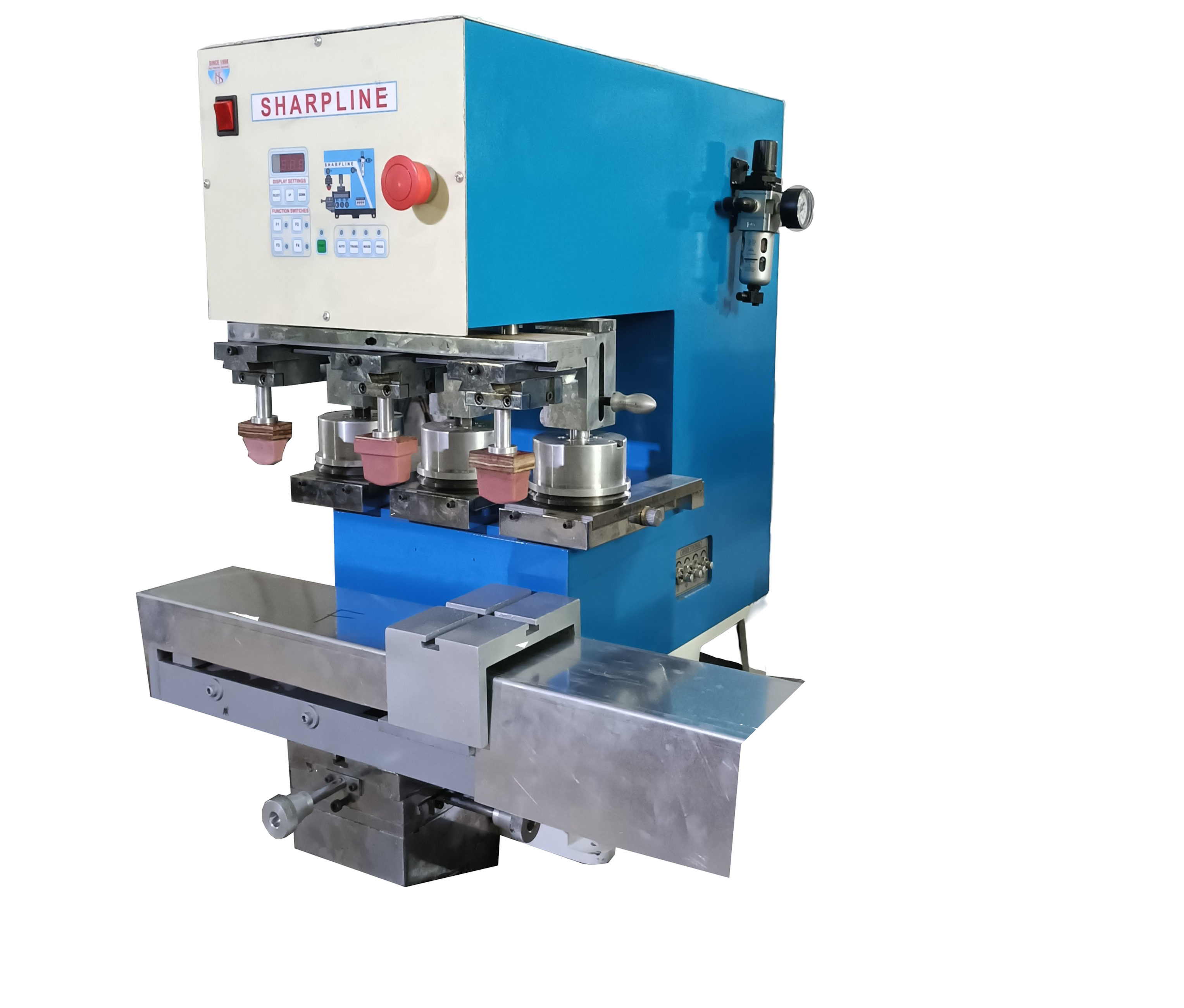
The key difference is not simply two colours versus four: it is the number of image transfers, ink systems, alignment points, setup tasks and quality checks required for each part. By comparing the machine layout, production workflow, artwork demands, maintenance burden and quotation criteria, you can choose the configuration that fits your products rather than paying for unused capacity.
Key takeaways
- Choose four colors when one cycle must reproduce a four-ink design.
- Compare indexed transfer paths, not machine names, to estimate cycle time.
- Specify artwork separation, registration tolerance and part geometry in the quote.
- Require a production trial covering color sequence, adhesion and repeatability.
How Two- and Four-Color Machines Transfer Ink
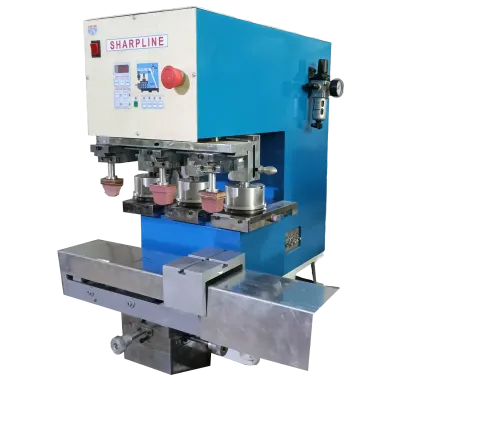
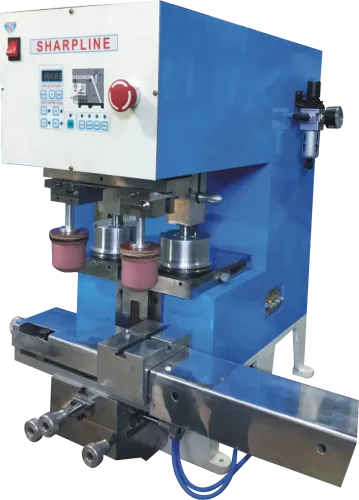
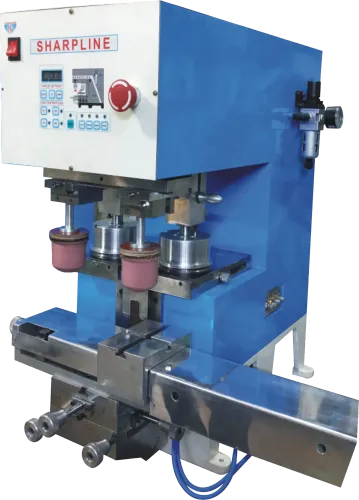
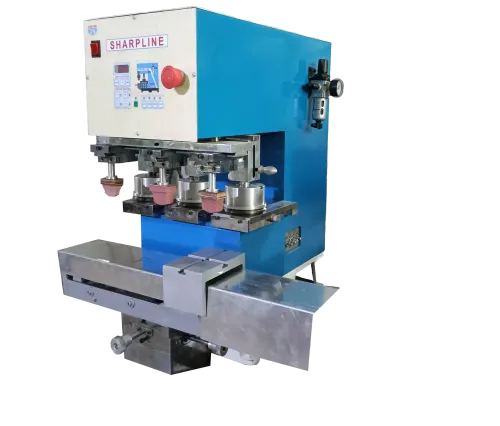
A four-color pad printing machine separates the artwork into four images, each carried by its own cliché and ink station in the conventional layout. Pads or the part index through the stations, transferring one ink at a time; other designs use shared pads, so confirm the machine drawing rather than relying on the name.
The workflow is:
- Expose and align four clichés, then load the specified spot-color inks.
- Locate the component in a repeatable nest and transfer color one.
- Index the part or pad to the next station, allowing the first layer to flash or cure enough to resist smearing.
- Repeat for colors two through four, then inspect registration and adhesion.
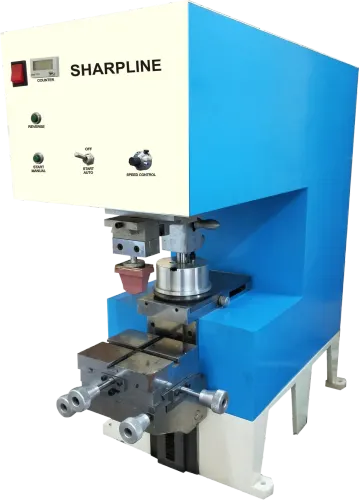
A double color pad printing machine normally uses two independent clichés, ink systems and transfer operations. “Double color” can also mean two stations or two colors within one cycle, so ask whether the quoted cycle includes both transfers and whether each color has its own pad and cup.
| Comparison | Four-color system | Double-color system |
|---|---|---|
| Capacity | Four registered inks | Two registered inks |
| Workflow | Four sequential transfers | Two sequential transfers |
| Setup | More alignment and cleaning points | Fewer setup points |
| Registration | Four interfaces to control | Two interfaces to control |
The phrase four color pad printing machines versus double color describes capacity, not image size: pad shape, compression, cliché area and part curvature still set the printable limit.
Cycle Time, Setup, Footprint and Operator Work
Moving from two colors to four can raise output per finished part without doubling parts per hour. The result depends on whether one fixture completes all colors or the extra colors add indexing, pad travel, drying and inspection time.
| Dimension | Double-color system | Four-color system |
|---|---|---|
| Cycle time | Two transfers and two ink systems keep the cycle shorter when loading and unloading dominate. | Four transfers can lengthen each cycle, but one fixture pass can eliminate a second handling operation. |
| Changeover | Clean and align two clichés, pads and ink systems. | Clean, align and verify four sets, adding more registration checks and recipe points. |
| Footprint | Requires less bench and guarding space. | Needs room for extra stations, ink cups, pad mechanisms, controls and access for cleaning. |
| Operator work | Load the part, start the cycle and inspect two-color results. | Manage four ink supplies, confirm color order, check registration and remove more contaminated consumables. |
A four-color machine saves time only when the second two colors replace separate handling or a second machine. If each color needs intermediate curing, the added dwell can erase that gain. Ask for the measured cycle time with part loading, unloading, cleaning, curing and inspection included—not an empty-machine stroke rate.
The label multi color pad printing machine says little about labor by itself. Industrial pad printing equipment earns its productivity through repeatable indexing, recipe control, guarding and automated pad cleaning. Four colors add capability; they also add points where an operator can load the wrong cliché, ink or sequence.
Artwork, Registration and Part Geometry
Choose two colors when artwork has two independent spot-color separations; choose four when it contains four spot colors or four process separations that must register. Four-color pad printing machines are not automatically CMYK presses: confirm whether the file uses spot inks, halftones, or both.
| Decision | Artwork test | Machine check |
|---|---|---|
| Two colors | Two spot separations | Two clichés and transfers |
| Four colors | Four spot separations or CMYK separations | Four registered transfers; confirm drying |
A multi color pad printing machine still needs a production-part trial. Image count does not determine printable size: pad shape, compression, cliché dimensions, image geometry and component curvature control transfer quality. Four colors can register on small marks while a large logo exceeds the available pad or cliché area.
- Registration: Use repeatable fixture datums, aligned clichés, controlled indexing and consistent pad compression; inspect gaps and overlaps on the finished component.
- Geometry: Match pad shape and hardness to the surface curvature; excessive compression spreads edges and distorts detail.
- Adhesion: Set color sequence, drying interval, substrate cleaning or treatment, ink compatibility and cure conditions; test cured prints on production parts with a defined rub or tape method.
Ink Systems, Maintenance and Production Risk
Open ink wells expose ink to air, so solvent evaporation changes viscosity during a run and dust or dried skin can enter the reservoir. They suit simpler two-color work when an operator can monitor viscosity and replenish ink, but four colors create four separate points for contamination and shade drift.
Closed ink cups reduce evaporation and contain ink with a sealed cup and doctor ring. They provide cleaner, more repeatable printing, but each cup, ring and associated cliché needs inspection and cleaning; a damaged ring can cause streaks or uneven ink deposits.
| Area | Two-color system | Four-color system |
|---|---|---|
| Consumables | Two clichés, pads, inks and ink cups or wells | Four of each, plus more doctor rings and cleaning materials |
| Changeover | Fewer parts to wash, label and reinstall | Twice the ink-system checks and more opportunities for mix-ups |
| Quality risk | Misregistration or contamination between two deposits | Registration drift, shade mismatch, cross-contamination and inconsistent drying across four deposits |
| Maintenance | Fewer seals, pads and moving parts to inspect | More wear points, recipes and cleaning records to control |
A four color pad printing machine also increases the cost of wasted starts: one faulty ink cup or cliché can spoil a complete multicolor decoration. Specify independent viscosity control, recipe storage and pad cleaning when selecting industrial pad printing equipment.
Short runs feel this burden most; long runs can justify it when one fixture replaces repeated handling.
When Double Color or Four Color Is the Better Investment
Choose a double color pad printing machine when most products need one or two spot colors, demand is steady, and a four-color job would add idle stations, cleaning and setup without reducing handling. Confirm what “double color” means: two transfers in sequence, two stations, or two colors in one cycle.
Four color capability is justified when one fixture can complete four registered colors, eliminating a second machine pass or manual handling. Compare the full cycle, not the color count: four colors do not automatically double output.
| Option | Better business case | Main trade-off |
|---|---|---|
| Double color pad printing machine | Two-color artwork, lower demand, simpler changeovers | Requires another pass for jobs needing three or four colors |
| Four-color machine | Frequent four-spot-color work and costly secondary handling | More stations, alignment points, cleaning and maintenance |
| Separate machines | Different products run concurrently or colors need separate schedules | More floor space, fixtures and operators |
| Screen printing | Large, relatively flat areas or a thicker ink deposit | Less suitable for small, curved or recessed details |
| Digital printing | Variable artwork, short runs and no cliché production | Substrate, adhesion, speed and finish require validation |
Compare four color pad printing machines versus double color models using fixture capacity, loaded cycle time, operator availability and changeover hours. A multi color pad printing machine is the better investment only when its extra capacity stays productive; otherwise, two simpler machines can provide redundancy and parallel production.
What to Put in a Machine Quote and Acceptance Test
Request a machine quote that states the complete layout, not just the color count: cliché and pad quantity, station sequence, maximum image area, part-indexing method, registration tolerance, cycle definition, ink-cup size, pad-cleaning method, recipe storage, guarding and integration points. A catalogue speed that excludes loading, indexing or cleaning is not a production rate.
- State the ink type, color standard, substrate, artwork, cure method and required adhesion test.
- Ask whether four colors use four clichés and pads, shared pads or sequential passes.
- Require a sample run at your actual part geometry and full planned run length.
- Record completed parts per hour, scrap, rework, color-to-color registration, adhesion after cure, changeover time, cleaning time and stoppages.
- Treat maximum print area and nominal strokes per minute as catalogue limits, not guarantees.
| Configuration | Quote detail | Acceptance measure |
|---|---|---|
| Double color | Two image stations, two transfer operations and the specified indexing method | Registration, handling time and output on the actual part |
| Four color | Four stations or the alternative pad sequence, plus any intermediate drying or curing | All four colors registered without smearing, contamination or added rework |
Four color pad printing machines are not automatically twice as productive, and four colors do not mean CMYK; request spot-color or process-color capability explicitly. For industrial pad-printing equipment, compare construction and controls separately from color capacity. SHARPLINE ENGINEERS should document those limits before you compare its listed configurations.
Related products
 | Double Color close ink cup pad Printing Machine Double Color close ink cup pad Printing Machine DOUBLE COLOR CLOSE INK CUP PAD PRINTING Get in touch with us for obtaining high quality Double Color Close Ink Cup Pad Printing as we are a... View product → |
 | DOUBLE COLOR OPEN INK WELL PAD PRINTING MACHINE DOUBLE COLOR OPEN INK WELL PAD PRINTING MACHINE We are designated with a position of trustworthy suppliers involved in dealing with Double Color Open Ink well Pad Printing Machine and offering the... View product → |
Frequently asked questions
How do two-color and four-color pad printing machines transfer ink?
Each color uses a separate image and ink station in the conventional layout. Pads or the part index between stations, while some machines use shared pads, so inspect the machine drawing.
What affects cycle time and operator work?
Compare indexing movement, pad count, loading method, ink-cup access, setup steps and the number of stations requiring cleaning or adjustment.
How do artwork and part geometry affect color registration?
Separate the artwork into color layers and check registration against the part’s curves, recesses, edges and datum features before approving the machine.
What belongs in a machine quote and acceptance test?
Specify color count, artwork files, substrate, ink system, registration tolerance, output target, part fixtures and a production trial covering adhesion, appearance and repeatability.
Keywords