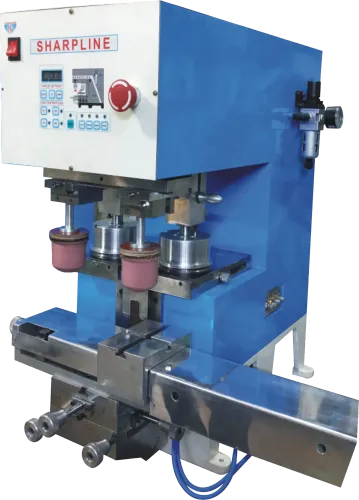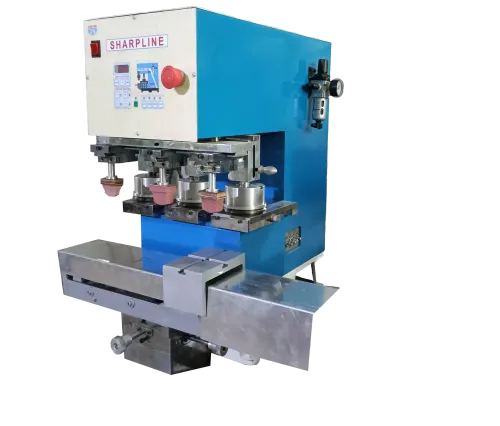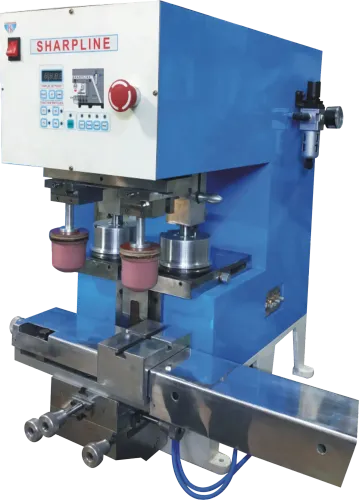
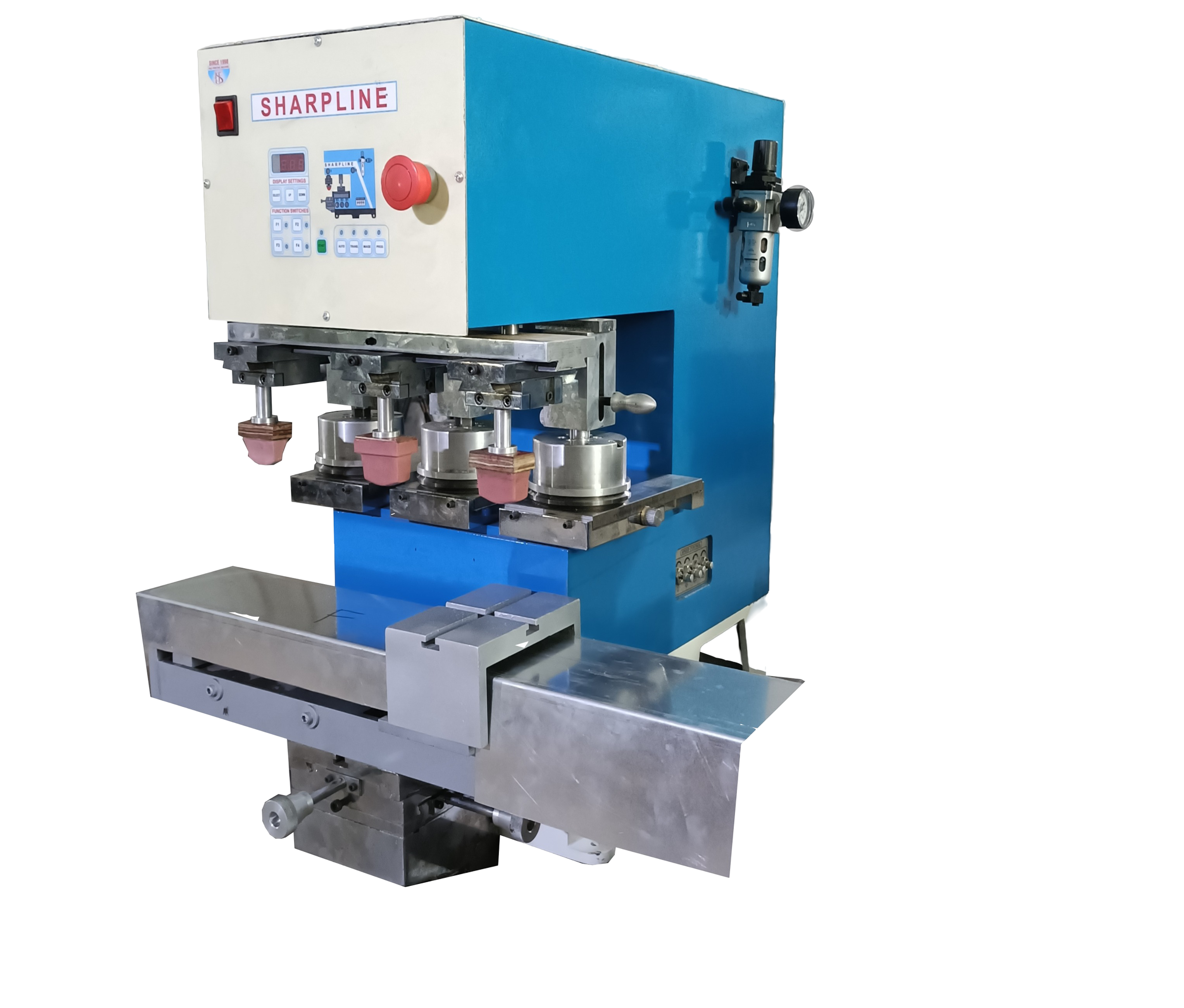
Medical parts rarely present a flat, forgiving surface: a syringe barrel, catheter hub, inhaler body, or diagnostic housing may combine tight print areas, curved walls, variable plastics, and demanding sterilisation exposure. You will be able to determine whether three indexed color stations are justified, specify the consumables and fixtures, qualify the print, and compare machine quotations without overlooking the controls that protect batch quality.
Key takeaways
- Use a repeatable nest and verify pad stroke, cup size, and artwork clearance.
- Match each ink to the medical substrate, sterilisation process, and curing method.
- Control registration with stable fixtures, consistent ink volume, and first-off checks.
- Request machine samples, consumable specifications, and documented adhesion results before purchase.
Which medical parts suit three-color pad printing, and how do you confirm machine fit?
Syringe barrels and plungers, inhaler bodies, catheter hubs, diagnostic housings, caps, tubes, molded handles, and coated metal components suit three-color pad printing when artwork needs three distinct colors and the part sits in a repeatable nest.
A three color pad printing machine transfers each color at an indexed position; it cannot correct inconsistent seating, flash, warpage, or shrinkage.
Record these part and fixture details before requesting quotations:
- Part diameter, overall height, draft angle, wall curvature, material, flash, warpage, available print area, fixture position, and silicone-pad access.
- Maximum and minimum print area, part envelope, station spacing, indexing tolerance, cycle time, parts per hour, fixture count, automation options, compressed-air and electrical requirements, changeover time, operator intervention, and reject handling.
Require a medical component printing machine supplier to prove these figures with your parts, not a catalogue sample.
| Option | Better fit | Main limitation |
|---|---|---|
| Three colors | Three distinct marks on a repeatable part | Highest cost, floor space, maintenance, setup time, and misregistration risk |
| One or two colors | Fewer artwork separations and simpler production | Cannot reproduce a genuine three-color design |
| Screen printing | Large, flat graphics | Poor fit for small curved surfaces |
| Digital, laser, or inkjet | Photographic images, variable data, or noncontact marking | Different adhesion, speed, and validation requirements |
Choose another process for porous untreated surfaces, nonrepeatable parts, or noncontact marking. Extra stations add reject-producing opportunities, so use one or two colors when the artwork allows it.
How are three colors transferred, registered, and supported by the consumable set?
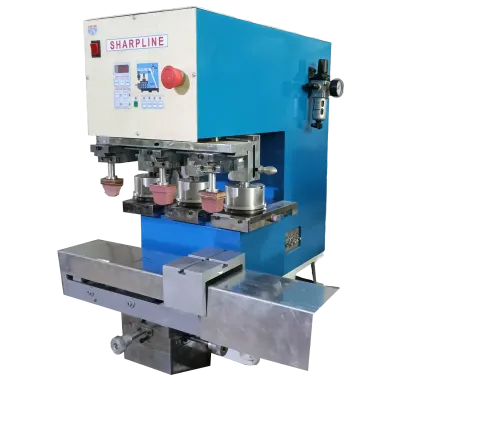
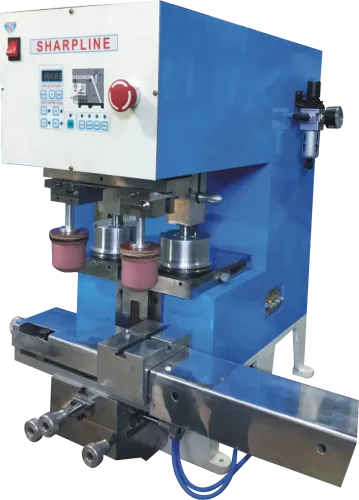
Each color uses its own artwork separation, etched cliché, ink cup, doctor ring, and silicone pad. The machine makes three indexed impressions rather than one combined transfer. A nest holds the part against repeatable datums while a shuttle or indexing mechanism presents it to each station.
Registration depends on molded-part consistency, fixture datums, station alignment, pad compression, and image distortion on curved surfaces. A pad that rolls differently can shift boundaries and character width.
The three-color close ink cup machine pad printing accessories and consumables package should include:
- Three etched plates or clichés; three closed ink cups or cup assemblies; and tungsten-carbide or specified doctor rings.
- Multiple silicone pad shapes, holders, inks, approved thinner or retarder, hardener, cleaning solvent, lint-free wipes, and masking materials.
- Dedicated fixtures plus spare seals, rings, cups, and doctoring components.
Test pad hardness, shape, durometer, surface finish, and compression on the actual geometry. Start by comparing cliché depths around 15–30 micrometres, then confirm cup diameter, ink volume, and solvent resistance. In a closed ink cup pad printing machine, a chipped, contaminated, worn, or poorly seated ring causes halos, leakage, incomplete wiping, and drifting color density.
| Option | Solvent exposure and evaporation | Cleaning, waste, setup, and changeover |
|---|---|---|
| Closed cup | Lower evaporation; solvent remains enclosed, but seals and rings still contact solvent | Less waste and cleaning during running; inspect and replace wear parts |
| Open system | Greater evaporation and operator exposure | More cleaning, solvent waste, setup adjustment, and color-change effort |
How do you qualify medical inks, curing, adhesion, and contamination controls?
Ask the ink supplier to identify chemistry, approved substrate range, two-component mix ratio, pot life, solvent compatibility, viscosity limits, thinner or retarder limits, and drying or curing method. Require stated heat temperatures, dwell times, or UV wavelength and dose.
| Substrate | Control to qualify | Failure risk |
|---|---|---|
| Polypropylene, polyethylene | Flame, corona, plasma, primer, or substrate-specific ink | Peeling after handling |
| Silicone, rubber, TPU | Primer or treated-surface ink; confirm solvent compatibility | Cracking or poor adhesion |
| Engineering plastics, coated metals, other low-surface-energy surfaces | Ink-system trial on the actual grade and coating | Delayed adhesion loss |
Increasing thinner can improve transfer while reducing deposited solids and weakening the film. Qualify two-component ink at its specified mix ratio and pot life, not by operator feel.
Match color using approved master samples and measured color targets. Control batch mixing and record ink lot numbers; do not accept operator judgment as the color standard.
Qualify the finished printed component, including substrate, primer, and ink film, against its intended cleaning, disinfectant, autoclave, ethylene oxide, radiation, or patient-contact exposure. Include ISO 10993-1 in the biological-evaluation plan, and apply ISO 13485 production controls when marking forms part of device manufacture.
A medical component printing machine needs covered ink, dedicated fixtures, validated cleaning, lint control, segregated tools, and separation from non-medical production. Control these records:
- Artwork and cliché revisions
- Ink and pad printing accessories and consumables lots
- Mix ratio, cure conditions, pad and ring replacement
- Setup approval and batch release
Which inspections and troubleshooting checks protect every printed batch?
Approve the first-off against signed artwork and a retained master sample before releasing production. On a closed ink cup pad printing machine or medical component printing machine, repeat the inspection during the batch, after stops, and after cleaning; a sharp first print does not prove lasting adhesion.
Check every batch for:
- Color against the approved target; position and registration against the stated tolerance.
- Character height and line width with a calibrated optical comparator, vision system, microscope, or defined gauge.
- Missing strokes, pinholes, smearing, halos, incomplete transfer, double images, and surface contamination.
- Artwork dimensions, including symbols, spacing, orientation, and revision identification.
Qualify minimum and maximum ink age, cup dwell time, pad life, cliché life, substrate-lot variation, start-up prints, machine-stop recovery, cleaning exposure, and the worst-case sterilisation cycle. Match adhesion, abrasion, solvent, disinfectant, and sterilisation tests to actual use. Tape or cross-cut tests compare settings; they do not replace exposure testing.
| Failure | Likely cause | Required check |
|---|---|---|
| Poor adhesion | Treatment, ink compatibility, cure, or contamination | Verify surface preparation, ink lot, cure, and cleanliness |
| Ink picking | Insufficient cure or excessive deposit | Check cure conditions and film thickness |
| Blurred edges | Pad compression, deep etching, or excess solvent | Confirm pad pressure, cliché depth, and viscosity |
| Incomplete transfer | Shallow etching, dirty cliché, wrong pressure, or viscosity drift | Inspect cliché, pressure, and ink control |
| Misregistration | Fixture seating, warpage, indexing, or pad deformation | Check datums, part geometry, indexing, and pad condition |
Define ring replacement for wear, chips, leakage, and density drift, and control solvent additions by work instruction. Retain nonconformance, rework, rejection, release, setup approval, and inspection records.
What should you request in a machine quotation and sample trial?
A defensible quotation starts with your process, not a brochure. Send production parts, approved artwork and revision, target color references, substrate and coating details, expected batch size, sterilisation and cleaning conditions, acceptance criteria, and traceability requirements. Ask SHARPLINE ENGINEERS, or any supplier, to treat the trial as evidence for a medical component printing machine.
1. Request a signed sample-trial report covering print speed, cycle time, three-color registration tolerance, print area, cup size, cliché depth, pad specification, ink system, curing conditions, start-up waste, changeover time, fixture count, operator steps, reject handling, and inspection method. Use your actual parts, not a flat substitute.
2. Request separately the machine dimensions, power and compressed-air requirements, automation and vision options, compatible consumable specifications, price, lead time, warranty, training, spare-parts availability, and after-sales response. State whether the three color pad printing machine prints sequentially, simultaneously, or through a common shuttle.
3. Confirm that the quote includes the complete three color close ink cup machine pad printing accessories and consumables package: three clichés, cups, doctor rings, pads and holders, inks, approved thinner or retarder, solvent, wipes, masking materials, seals, and spares.
Buy only when written acceptance criteria and records prove repeatable position, color, adhesion, cure, and sterilisation performance. The trial may show that a two-color or single-color machine reduces risk, cost, and changeover.
Related product
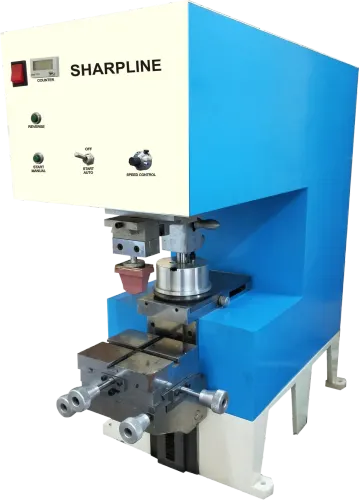
 | THREE COLOR CLOSE INK CUP PAD PRINTING MACHINE THREE COLOR CLOSE INK CUP PAD PRINTING MACHINE Keeping in consideration the latest standards, we are involved in supplying only high quality Three Color Close Ink Cup Pad Printing Machine at... View product → |
Frequently asked questions
Which medical parts suit three-color pad printing?
Syringe barrels and plungers, inhaler bodies, catheter hubs, diagnostic housings, caps, tubes, molded handles, and coated metal components suit the process when artwork needs three colors and the part sits in a repeatable nest.
How do three colors stay registered in pad printing?
The machine transfers each color through separate etched plates, ink cups, and print cycles. Registration depends on accurate artwork separation, stable tooling, controlled pad movement, and a fixture that locates every part consistently.
How do you qualify pad-printing inks for medical parts?
Qualify ink against the exact substrate, curing method, cleaning agents, sterilisation process, and intended use. Record adhesion, abrasion, chemical-resistance, and cure results for each approved ink system.
What should you request before buying a three-color pad printing machine?
Request a sample trial using production parts, approved artwork, and proposed consumables. Ask for the machine layout, cup and plate specifications, pad details, registration results, cycle information, cleaning requirements, and documented inspection criteria.
Keywords